CD Projekt Red Workers Unite Against Industry Uncertainty
CD Projekt Red’s layoffs in 2023 spurred the formation of the Polish Gamedev Workers Union, as developers demanded security amid booming sales.
The gaming industry witnessed a significant moment in 2023 when developers at CD Projekt Red took a bold step toward protecting their livelihoods. Despite the massive commercial success of titles like Cyberpunk 2077 and its acclaimed Phantom Liberty expansion, the studio's workforce found themselves facing an uncertain future that would ultimately spark a movement for workers' rights across Poland's gaming sector.
📊 Success Amid Uncertainty
The numbers tell a story of triumph and turmoil existing side by side. Cyberpunk 2077 has achieved remarkable commercial success, surpassing 25 million copies sold since its launch. The Phantom Liberty expansion alone moved over three million copies during its debut week, demonstrating that player enthusiasm for CD Projekt Red's cyberpunk universe remained strong despite the game's rocky launch history.
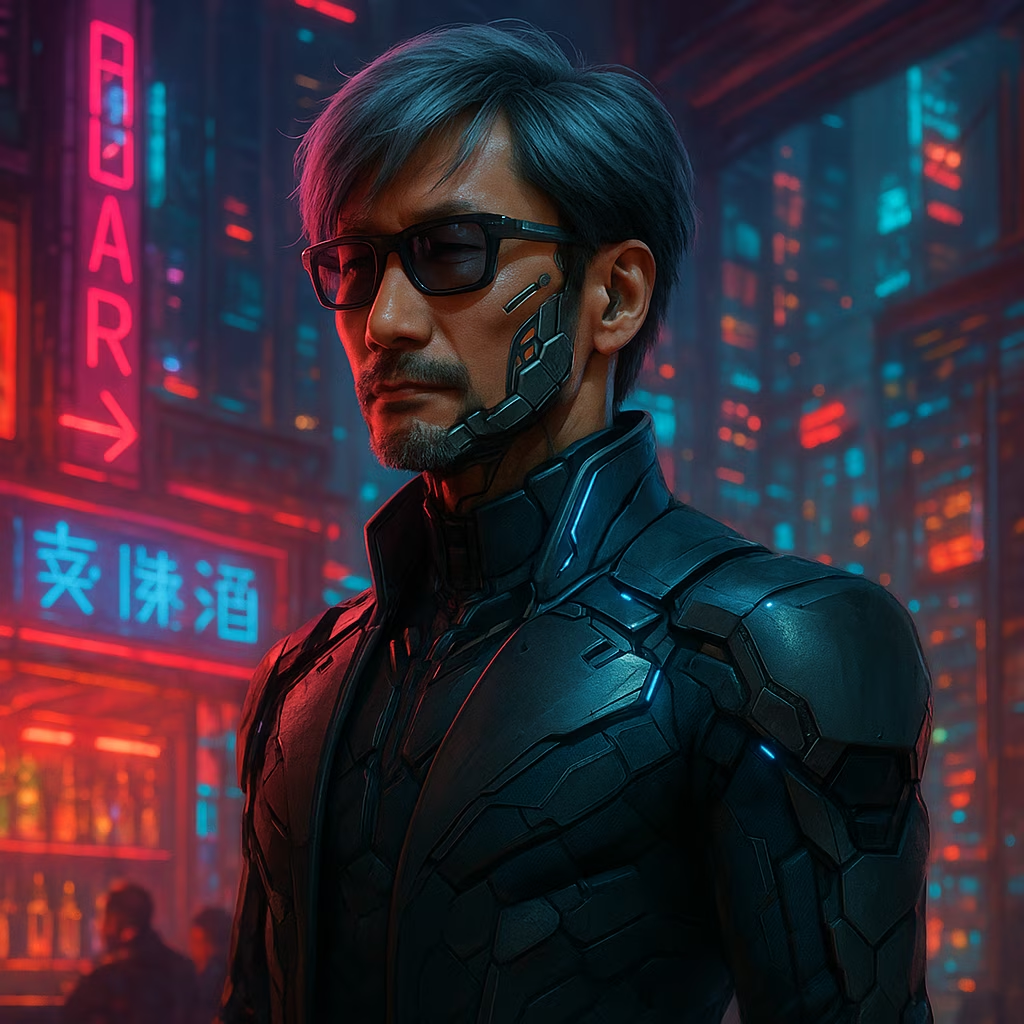
Yet behind these impressive figures lies a different narrative—one of job insecurity and workforce reduction. The studio currently has multiple high-profile projects in development, including The Witcher 4 and a comprehensive remake of the original Witcher game. These ambitious undertakings would seemingly require a robust development team, making the workforce reductions all the more puzzling to those affected.
🛡️ Birth of the Polish Gamedev Workers Union
In response to mounting pressures and widespread job cuts, CD Projekt Red developers took matters into their own hands by establishing the Polish Gamedev Workers Union. This groundbreaking organization was founded by passionate individuals including QA analyst Pawel Myszka and gameplay programmer Lev Ki, who recognized the urgent need for collective representation in Poland's gaming industry.
The union's formation wasn't a spontaneous decision but rather the culmination of growing concerns that intensified through three successive rounds of layoffs. These workforce reductions, which began in July 2023, cast a wide net across various departments:
-
Development teams working on core game features
-
Publishing departments managing game distribution
-
Back-office staff supporting business operations
-
Quality assurance analysts ensuring product quality
The scale of these cuts proved substantial, with approximately 9% of CD Projekt Red's workforce receiving termination notices. For those remaining, the psychological impact proved equally devastating, creating what union founders described as a work environment characterized by "tremendous stress and insecurity."
💔 The Human Cost of Restructuring
The mental health implications of constant workforce uncertainty cannot be overstated. Developers who survived the initial rounds of layoffs found themselves working in an atmosphere of perpetual anxiety, never knowing if they might be included in the next wave of cuts. This environment of fear and instability took a significant toll on employee wellbeing, affecting both personal lives and professional productivity.
The union's founding members emphasized that their initiative arose directly from these challenging conditions. Their primary objectives focused on securing:
| Priority | Description |
|---|---|
| Job Security | Establishing protections against arbitrary terminations |
| Mental Health Support | Advocating for resources addressing workplace stress |
| Fair Treatment | Ensuring transparent communication about company decisions |
| Industry Standards | Setting precedents for worker protection across Polish studios |
🏢 Corporate Justifications and Industry Context
CD Projekt's parent company attempted to frame the layoffs within a broader business strategy. CEO Adam Kicinski publicly stated that the studio had become overstaffed and that alternative opportunities wouldn't materialize in the upcoming year. The company positioned these workforce reductions as necessary steps toward building "more effective project teams."
In an official statement released during the initial layoff announcement, CD Projekt outlined their vision for an "ongoing transformation." The company claimed these measures would enable them to produce top-quality games on schedule without resorting to the controversial practice of crunch—extended periods of mandatory overtime that have plagued the gaming industry for decades.
However, this cost-cutting approach ultimately resulted in over 100 talented developers losing their positions. The timeline established by the parent company indicated that workforce reductions would continue through the first quarter of 2024, extending the period of uncertainty for months beyond the initial announcements.
🌍 A Broader Movement Taking Shape
The formation of the Polish Gamedev Workers Union represents more than just a response to conditions at a single studio. This initiative aims to provide representation for all game developers working throughout Poland, potentially establishing labor standards that could influence the entire regional industry.
This movement toward unionization extends far beyond Polish borders. The gaming industry worldwide has witnessed increasing worker organization efforts, with similar initiatives emerging across different markets and company cultures. SEGA of America formed its own union in 2023, demonstrating that workers at major publishers and developers across multiple continents are recognizing the value of collective bargaining and organized representation.
🎮 The Paradox of Success and Insecurity
What makes the situation at CD Projekt Red particularly noteworthy is the stark contrast between product success and workforce stability. Phantom Liberty launched to critical acclaim and strong sales figures, yet the developers who contributed to this success found their positions remained vulnerable. This disconnect raises important questions about how the gaming industry values its creative talent and whether commercial success translates to job security for those who make these achievements possible.
The union's establishment serves as a clear signal that developers are no longer willing to accept this disconnect as an inevitable aspect of the industry. By organizing collectively, these workers are asserting that those who create beloved games deserve stability and protection, not just during development cycles but throughout their careers.
🔮 Looking Toward the Future
As the Polish Gamedev Workers Union establishes its presence and advocacy efforts, the gaming industry watches closely to see how this development might influence labor relations across the sector. The union's success or failure in protecting jobs at CD Projekt Red and other Polish studios could set important precedents for worker organization efforts in other regions.
For the developers themselves, the union represents hope for a more stable future—one where their contributions are valued not just through sales figures and critical reviews, but through fair treatment, job security, and respect for their wellbeing. As the gaming industry continues to generate billions in revenue annually, the question remains whether companies will recognize that their greatest assets aren't proprietary engines or intellectual properties, but the talented individuals who bring virtual worlds to life.
The story of CD Projekt Red's unionization effort illustrates a crucial moment in gaming industry history, where creative professionals are demanding a voice in their working conditions and future prospects. Whether this marks the beginning of widespread change or remains an isolated incident will depend largely on how both workers and companies respond to these evolving dynamics in the months and years ahead. 🎯✨