Cyberpunk 2077 in 2025: The Magnificent Flaws of Night City's Digital Dystopia
Cyberpunk 2077's compelling narrative evolution captivates players, yet its immersive world reveals undeniable flaws in Life Paths, romance options, and narrative dissonance.
Night City's neon-soaked streets continue to captivate players in 2025, a full five years after Cyberpunk 2077's tumultuous birth. The game has transformed like a caterpillar into a chrome-plated butterfly, with countless updates and the revolutionary Phantom Liberty expansion reshaping its digital DNA. Yet, even as CD Projekt Red's dystopian masterpiece stands tall among the giants of gaming, certain cracks in its façade have become impossible to ignore – like noticing the stage makeup on an actor under harsh theater lights during a second viewing.
Life Paths: The Roads Less Traveled
The Life Path system in Cyberpunk 2077 promised players the narrative equivalent of a gourmet three-course meal but delivered something closer to a fancy appetizer followed by standard fare. Like a magician who performs an elaborate setup only to produce a rather ordinary rabbit, the Life Paths dazzle initially but fade into insignificance as the story progresses.
The Corpo, Street Kid, and Nomad beginnings offer unique prologues that sparkle with potential, but soon converge into essentially the same narrative river. These divergent backgrounds, which should fundamentally alter V's journey through Night City, instead provide little more than occasional dialogue options that function as narrative garnish rather than substantial story branches.
Romance Options: Love in Limited Supply
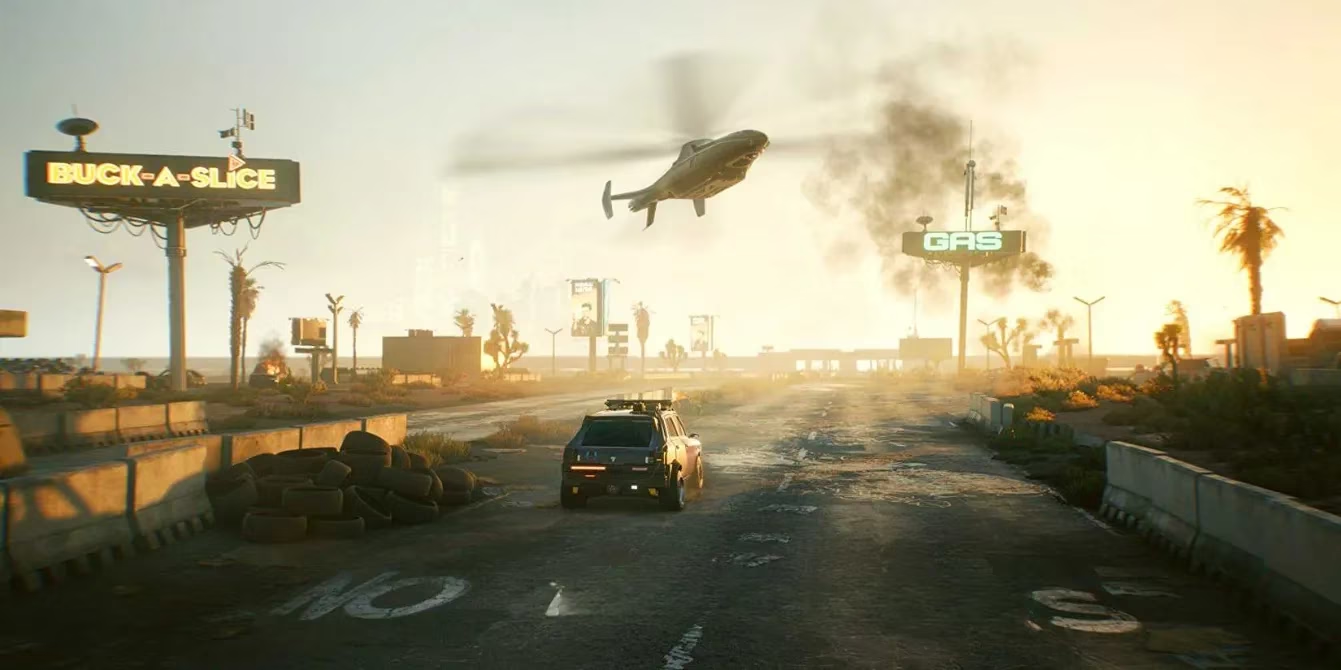
The romantic entanglements in Cyberpunk 2077 shine with emotional depth and character development that would make even the most hardened solo shed a tear. However, the romance options are as limited as water in the Badlands – parched players find only four potential partners, each locked behind rigid gender preferences. Male V can romance Panam or Kerry, while female V is limited to Judy or River – a selection as restrictive as a corporate dress code.
These romances unfold like exquisite short stories that end too soon, leaving players hungry for more meaningful interactions. After completing their respective questlines, these once-vibrant relationships wither into occasional text messages and brief encounters, like exotic flowers that bloom spectacularly but briefly before fading away.
Narrative Dissonance: The Ticking Clock That Never Strikes
The central premise of Cyberpunk 2077's main story hangs over players like the sword of Damocles – V is dying, with Johnny Silverhand's digital ghost gradually overwriting their consciousness. This urgency creates a narrative tension that collapses like a house of cards when players inevitably spend dozens of hours completing side quests, racing cars, or simply admiring Night City's architectural wonders.
This disconnect between story and gameplay creates a cognitive dissonance as jarring as a classical symphony suddenly interrupted by death metal. V can be told they have weeks to live, then spend months in game time helping strangers find their missing vehicles or participating in underground boxing tournaments, with no apparent progression of their condition until the plot demands it.
The Reluctant Villain: V's Moral Railroading
Despite Night City being a cesspool of corruption that would make a sewer system blush with embarrassment, Cyberpunk 2077 stubbornly resists letting players embrace their inner villain. The game's narrative magnetically pulls V toward heroic actions like a cyberpsycho to chrome, even when presented with opportunities for moral ambiguity.
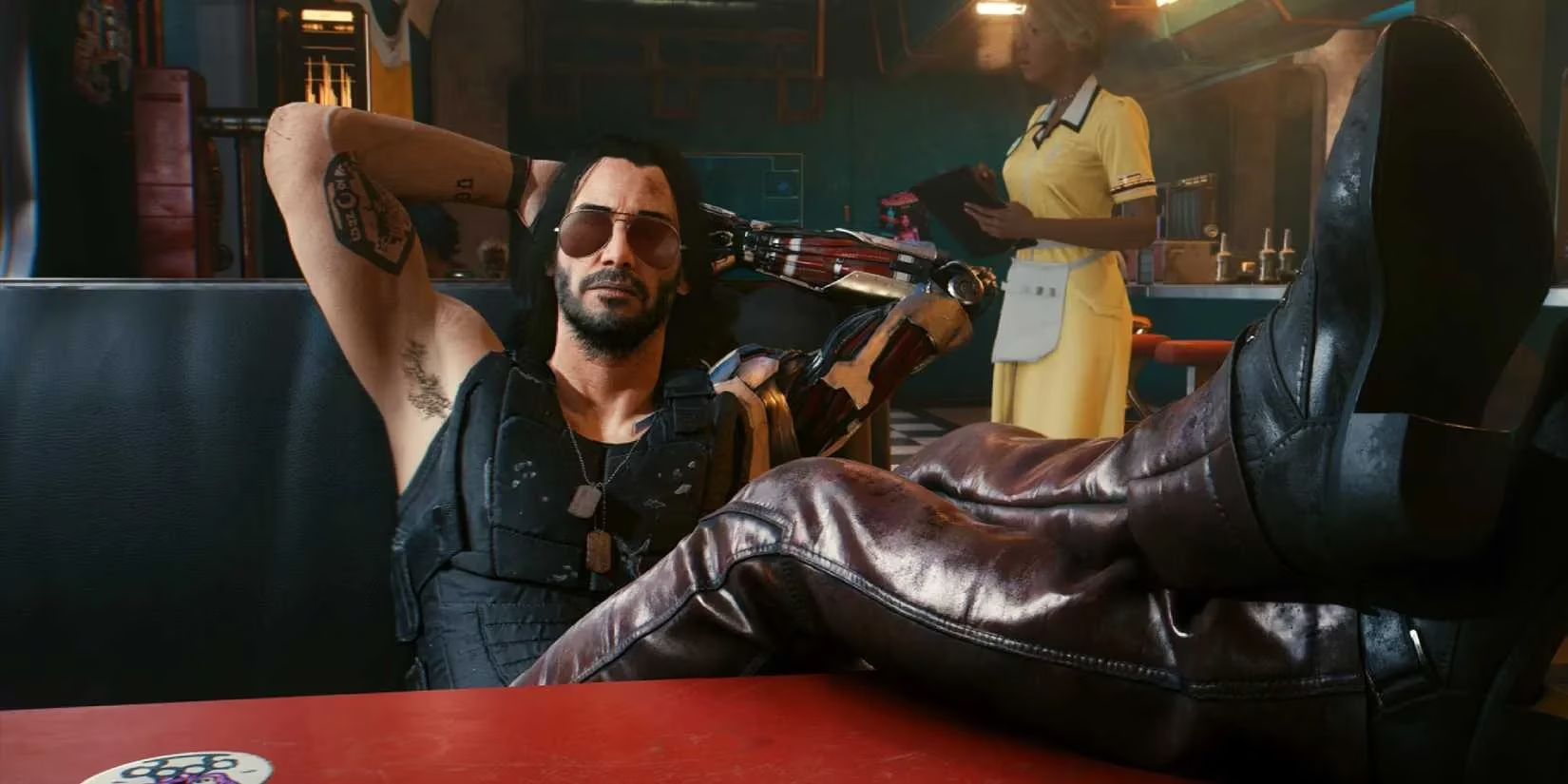
Players hoping to carve out a reputation as Night City's most feared mercenary find themselves instead cast as its reluctant savior. V can gun down countless gang members, but the narrative consistently positions these actions as justified or necessary – a limitation that feels as constraining as a too-tight exoskeleton when compared to the marketing's promises of unlimited player agency.
Night City: The Beautiful Façade
Night City stands as a monument to digital architecture – a sprawling metropolis that looms over players like an omnipresent deity, breathtaking in its scale and detail. Yet this visual feast quickly reveals itself to be more Hollywood set than living environment. The city's countless apartments, stores, and buildings stand tantalizingly closed off, like a buffet behind bulletproof glass.
This limitation transforms Night City from a playground into a painted backdrop – gorgeous to behold but frustratingly shallow in interaction. The metropolis teems with life yet remains strangely untouchable, its population as unreachable as stars in the night sky.
NCPD: Law Enforcement from the Stone Age
Despite multiple updates since launch, Night City's police force operates with all the sophistication of a stone wheel compared to the hover-car technology surrounding them. Police response to player crimes lacks the nuance and escalation that has been standard in open-world games for years, functioning instead as a punishment system rather than an immersive element of the world.
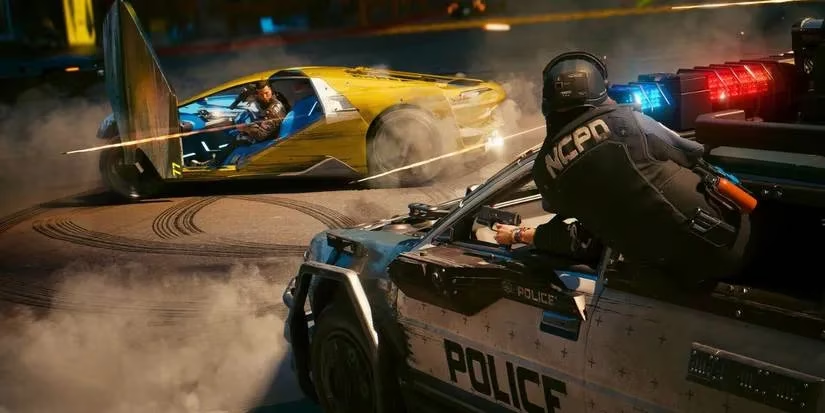
The NCPD Scan Hustles – those ubiquitous crime scenes scattered throughout Night City – blend together like identical corporate drones. These repetitive encounters litter the map like digital confetti, promising variety but delivering monotony as predictable as corporate corruption.
Enemy Variety: The Same Faces in Different Places
The combat in Cyberpunk 2077 has evolved dramatically since launch, with the 2.0 update introducing build variety that would make a Ripperdoc's catalog seem limited by comparison. Yet this diversity in player options only highlights the homogeneity of enemies, who fall into predictable archetypes regardless of their gang affiliations or corporate loyalties.
Whether facing Maelstrom, Tyger Claws, or Militech forces, players quickly recognize the same basic enemy types dressed in different clothes – melee attackers who charge like enraged bulls, standard gunners who duck and cover, and the occasional netrunner who stands still while hacking. This repetition transforms what should be unique encounters into familiar routines, like watching the same play with different costumes.
Grounded Disappointment: The Flying Cars We Can't Have
In a world where flying vehicles zip through Night City's skyline like mechanical birds, players remain firmly grounded, their transportation options limited to the city streets. Several missions tease the possibility of aerial travel, allowing V to briefly experience the freedom of the skies before returning them to terra firma – a tantalizing glimpse of what could have been.
This limitation feels like being invited to a swimming pool but only allowed to dangle your feet in the water. The technology exists within the game world, making its unavailability to players all the more frustrating – a reminder of the invisible walls that constrain even the most ambitious open worlds.
The Crowd: Soulless Automatons
The citizens of Night City move through their digital lives with all the personality of wind-up toys, following predetermined paths with robotic precision. Their reactions to player actions remain limited and predictable, breaking the illusion of a living, breathing metropolis.
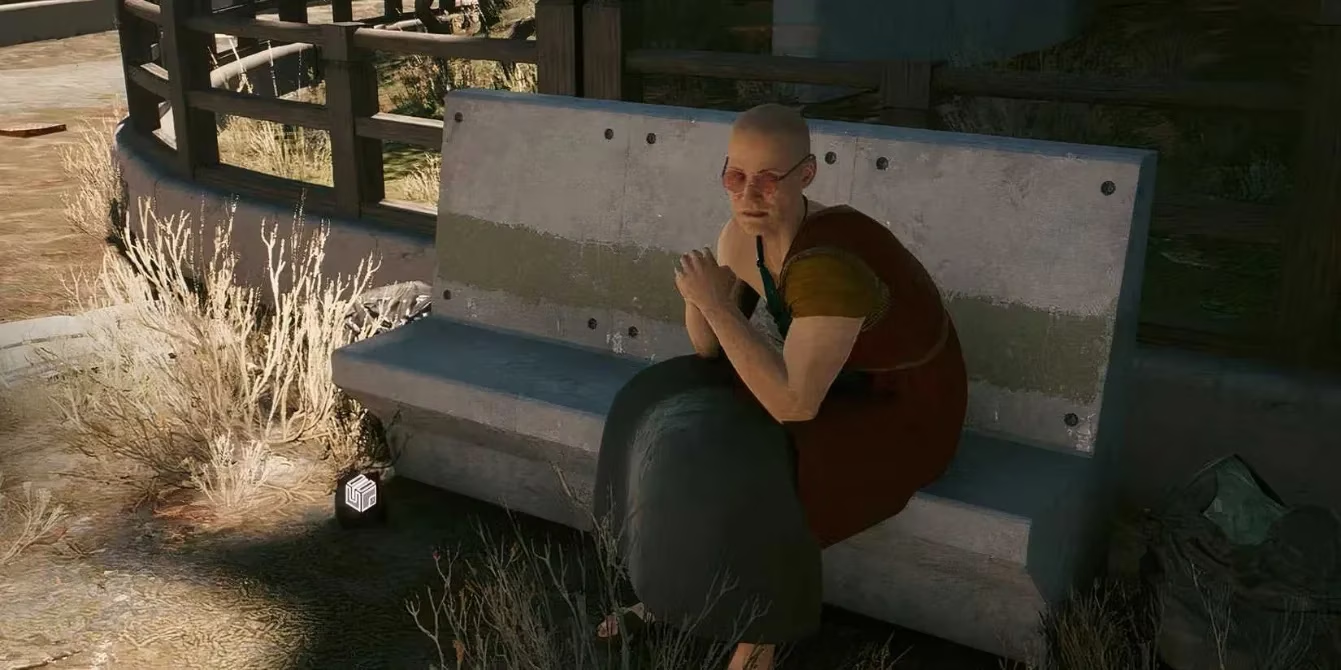
This limitation becomes increasingly apparent with each visit to Night City, as players notice the same NPC behaviors repeating like a skipping record. The population exists as set dressing rather than participants in the world – mannequins arranged to create the impression of life without its unpredictability or depth.
Despite these persistent flaws, Cyberpunk 2077 in 2025 remains an extraordinary achievement – a digital world that continues to captivate players with its style, narrative depth, and atmospheric immersion. Its imperfections stand out precisely because the rest of the experience shines so brightly, like minor scratches on an otherwise flawless chrome implant.
As we look toward the future and the promised sequel, these limitations serve not as condemnations but as opportunities – areas where Cyberpunk's already impressive foundation can be built upon to create something truly revolutionary. Night City, for all its flaws, remains a destination worth visiting – a digital dystopia whose beauty and brutality continue to enthrall even as we recognize its boundaries. 🌆🔫🤖