Cyberpunk's Phoenix: How CDPR's Redemption Arc Could Reshape Gaming
Cyberpunk 2077 redemption and controversy shape Night City's legacy, as the sequel promises a polished, visionary experience.
The neon-drenched streets of Night City have witnessed a transformation as remarkable as any neural implant upgrade. Where once disappointment and technical chaos reigned supreme, a carefully reconstructed digital metropolis now stands—polished, expanded, and bearing the scars of its tumultuous birth. The journey from catastrophe to redemption has been nothing short of extraordinary, yet the story remains unfinished, its final chapter yet to be written.
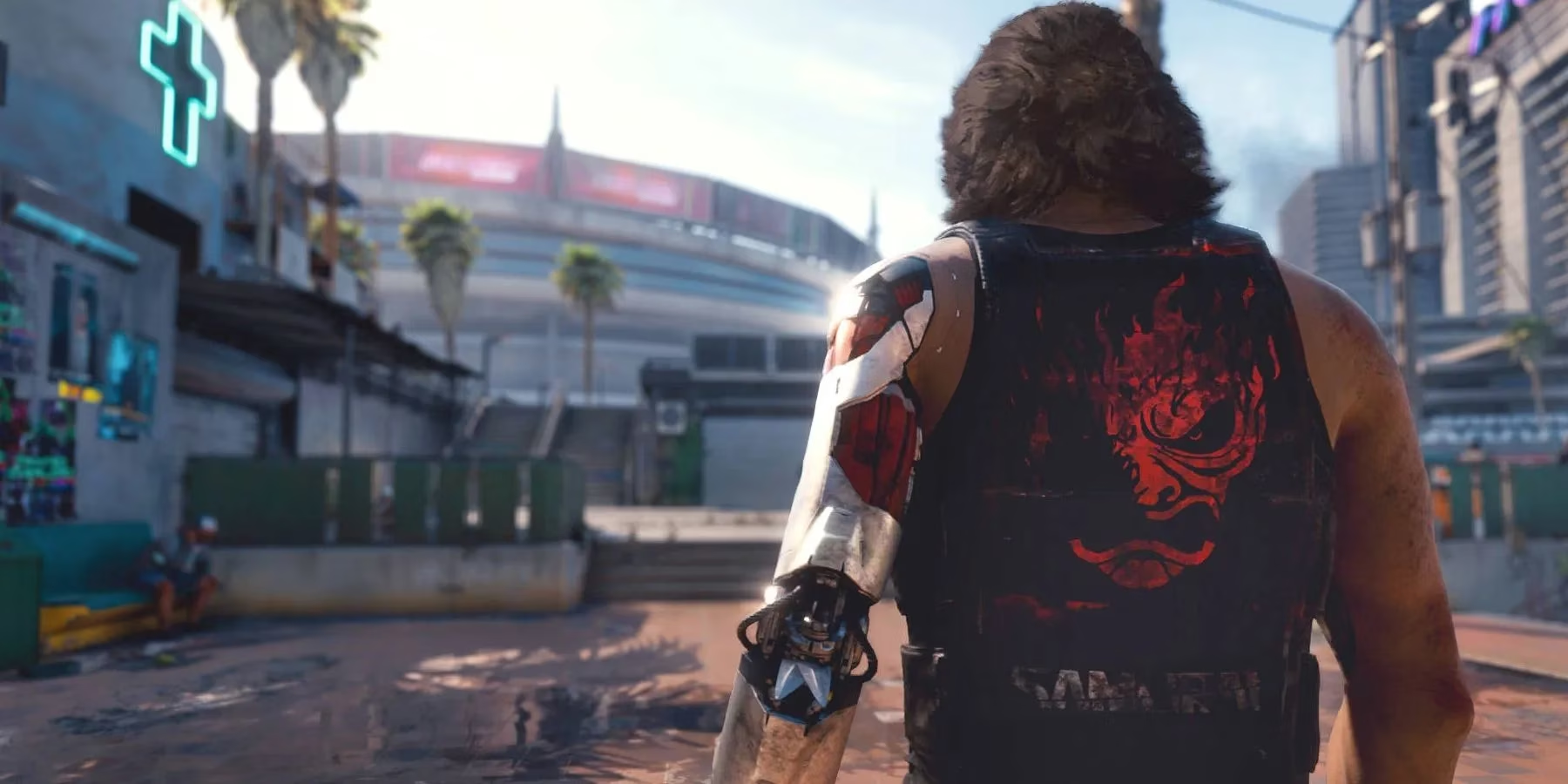
The Long Road Back from the Edge
Years of relentless patching, the substantial Phantom Liberty expansion, and unwavering developer commitment have finally brought official development to a close. For countless netrunners and mercenaries who ventured into Night City, the game has earned something precious: a second chance. The transformation has been substantial—what was once a beautiful but broken promise has evolved into an experience approaching the original vision that captivated millions before that fateful 2020 launch.
Yet redemption, as any street-smart fixer knows, comes with a price tag. The costly salvation operation consumed immense resources, transforming Cyberpunk 2077 into something more polished and feature-complete. Still, one truth remains inescapable: this is fundamentally a game that required fixing rather than one that launched to universal acclaim and standing ovations. That distinction matters, perhaps more than some might care to admit.
The Indelible Stain of Controversy
The launch controversy clings to Cyberpunk 2077's reputation like persistent malware in a corrupted system. While the current state represents undeniable improvement—a night-and-day difference from those early, chaotic weeks—the memory of what transpired cannot be completely erased. It's the classic case of "you never get a second chance to make a first impression," and brother, did that first impression leave a mark.
Some gamers maintain their boycott, refusing to jack into Night City regardless of how many patches have been deployed. For them, the principle matters more than the product's current state. They remember the broken promises, the console debacle, the refunds—all the messy business that no amount of post-launch polish can completely wash away. That's the harsh reality CD Projekt Red must navigate as they chart the franchise's future course.
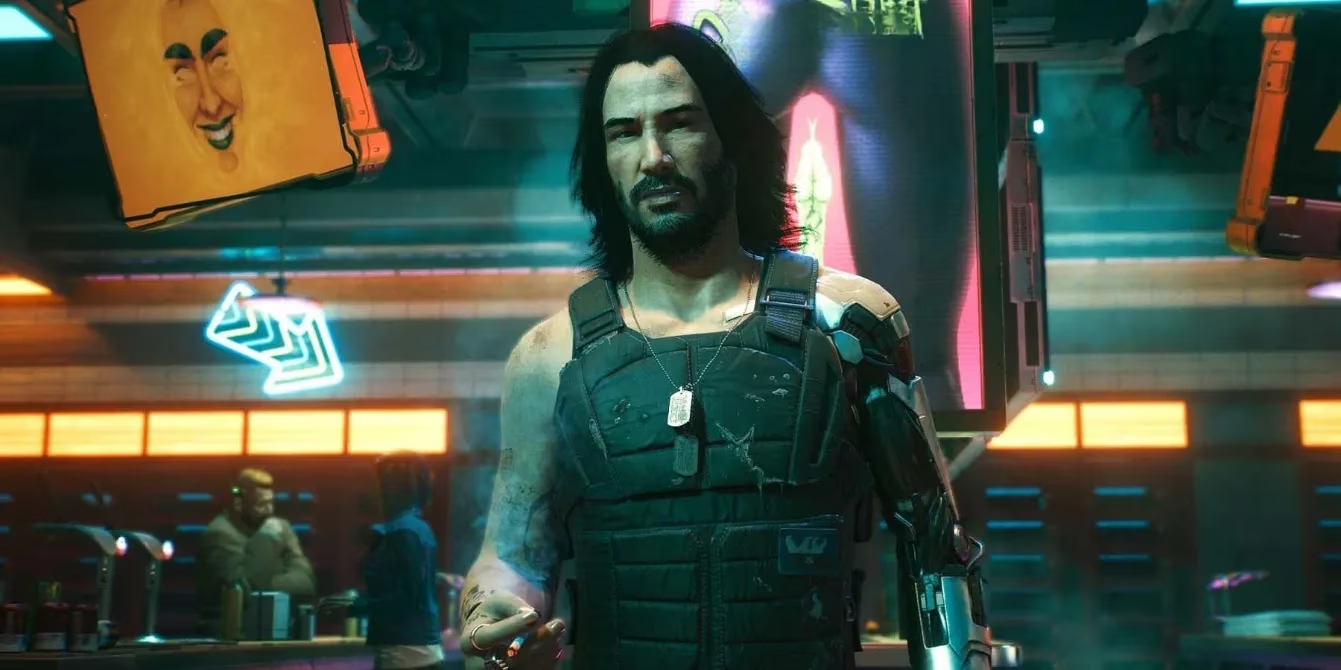
The Sequel: A Chance for Renaissance
CD Projekt Red has officially confirmed early development of a sequel, and the implications are fascinating. Armed with hard-won lessons from the original's troubled genesis, the studio possesses knowledge money cannot buy—the understanding of what happens when ambition outpaces execution, when marketing hype eclipses development reality.
The sequel operates under fundamentally different circumstances. Remember the pre-launch fervor? The hype was astronomical, practically stratospheric. CD Projekt Red had thrown everything behind the marketing blitz—celebrity endorsements, breathtaking previews, promises of revolutionary gameplay. Expectations soared to impossible heights, setting up an almost inevitable fall when reality proved more complicated than the marketing materials suggested.
Tempering Expectations, Perfecting Execution
This time around, expectations from the gaming community will likely be more grounded. The sequel doesn't carry the burden of impossible hype; instead, it bears the weight of proving that CD Projekt Red has genuinely learned from past mistakes. This represents both challenge and opportunity—a chance to focus less on generating buzz and more on delivering quality from day one.
Key advantages for the sequel include:
-
Battle-tested technology: The foundation exists, requiring refinement rather than creation from scratch
-
Established lore: The Cyberpunk universe has been expanded and deepened
-
Community understanding: Fans know what to expect, reducing pressure for revolutionary innovation
-
Learned lessons: Development team possesses intimate knowledge of what works and what doesn't
If this sequel—and subsequent Cyberpunk releases—can achieve smooth, satisfying launches free from major controversy, the franchise's identity could finally shed its troubled origins. We're talking about a complete narrative transformation, where 2077's launch becomes a footnote rather than the defining characteristic.
Building a Legacy Beyond Redemption
The broader implications extend far beyond Night City's boundaries. CD Projekt Red previously struck gold with The Witcher series, with the third entry widely regarded as not just the trilogy's pinnacle but one of gaming's greatest achievements. That progression—from good to great to legendary—represents the blueprint Cyberpunk could follow.
Consider the possibilities:
| Potential Outcome | Impact on Franchise | Impact on Industry |
|---|---|---|
| Smooth sequel launch | Establishes reliability | Demonstrates redemption viability |
| Continued quality improvements | Builds devoted fanbase | Sets new recovery standards |
| Innovative gameplay evolution | Creates franchise identity | Pushes genre boundaries |
| Expanded transmedia presence | Strengthens IP value | Shows multimedia potential |
If Cyberpunk successfully births a standalone series free from major technical or ethical controversies, the gaming industry could witness something remarkable. We might look back on the 2020 release as the humble, troubled beginning of something far greater—a franchise that stumbled out of the gate but ultimately found its stride and redefined expectations.
The Phoenix Metaphor 🔥
There's poetic justice in the idea that a game set in a world of resurrection technology might itself experience rebirth. Night City, after all, is a place where death represents merely temporary inconvenience for those with sufficient resources. Perhaps the franchise mirrors its own fictional universe—damaged, broken even, but ultimately reconstructible through dedication and investment.
The redemption arc carries lessons extending beyond CD Projekt Red:
-
Accountability matters: Acknowledging problems and committing to solutions can rebuild trust
-
Patience pays dividends: Rushing releases damages reputations; quality requires time
-
Community engagement works: Listening to players and responding to feedback creates loyalty
-
Long-term thinking wins: Short-term profits from broken launches cost more than they generate
The Road Ahead: Opportunities and Obligations
CD Projekt Red now stands at a crossroads. The Cyberpunk IP possesses immense potential—rich lore, compelling aesthetic, engaging gameplay mechanics when properly implemented. The question isn't whether the universe can support multiple quality entries; The Witcher trilogy already proved the studio capable of such sustained excellence.
Rather, the question centers on whether CD Projekt Red will apply lessons learned, resist the temptation of overpromising, and prioritize substance over spectacle. The gaming community watches with cautious optimism, having witnessed both the depths of disappointment and the heights of redemption.
Currently available on PC, PS4, PS5, Xbox One, and Xbox Series X/S, Cyberpunk 2077 represents more than just a game—it's a case study in crisis management, community relations, and the possibility of corporate redemption. Whether that redemption proves lasting depends entirely on what comes next. 🎮
The neon lights of Night City continue burning bright, casting both shadows of past mistakes and illuminating paths toward future triumph. For CD Projekt Red, the mission remains clear: prove that Cyberpunk 2077 wasn't just redeemed but represented the foundation for something truly legendary. Only time—and that highly anticipated sequel—will reveal whether this phoenix truly rises from its ashes or merely smolders in memory of what might have been.