Echoes of War: Militech's Nuclear Ambitions in Project Orion
Explore the corporate dominance and technological evolution in Cyberpunk's universe as Militech's unchecked capitalism and weaponized ideology shape the anticipated sequel, Project Orion.
In the neon-drenched shadows of 2026, as we await CD Projekt Red's highly anticipated sequel to Cyberpunk 2077, whispers of Project Orion's direction have begun to reverberate through digital corridors. The original game's universe—a tapestry of corporate dominance and technological evolution—remains etched in the collective consciousness of gamers worldwide. Its world, where megacorporations dictate the rhythm of existence, continues to haunt and fascinate in equal measure.
The Corporate Leviathan
Militech stands as a colossus among giants in Night City's corporate ecosystem. They craft destruction with the precision of artists, selling death in sleek packaging. Their fingerprints mark every conflict zone, every border dispute, every shadow war fought beyond public scrutiny. The corporation thrives on chaos, harvesting profit from the fertile soil of human suffering.
Within this framework of unchecked capitalism, Militech represents not merely a business entity but an ideology—a testament to humanity's capacity for self-destruction in pursuit of dominance. Their weapons flow through Night City like blood through veins, sustaining its violent heartbeat.
Metal Gear's Shadow
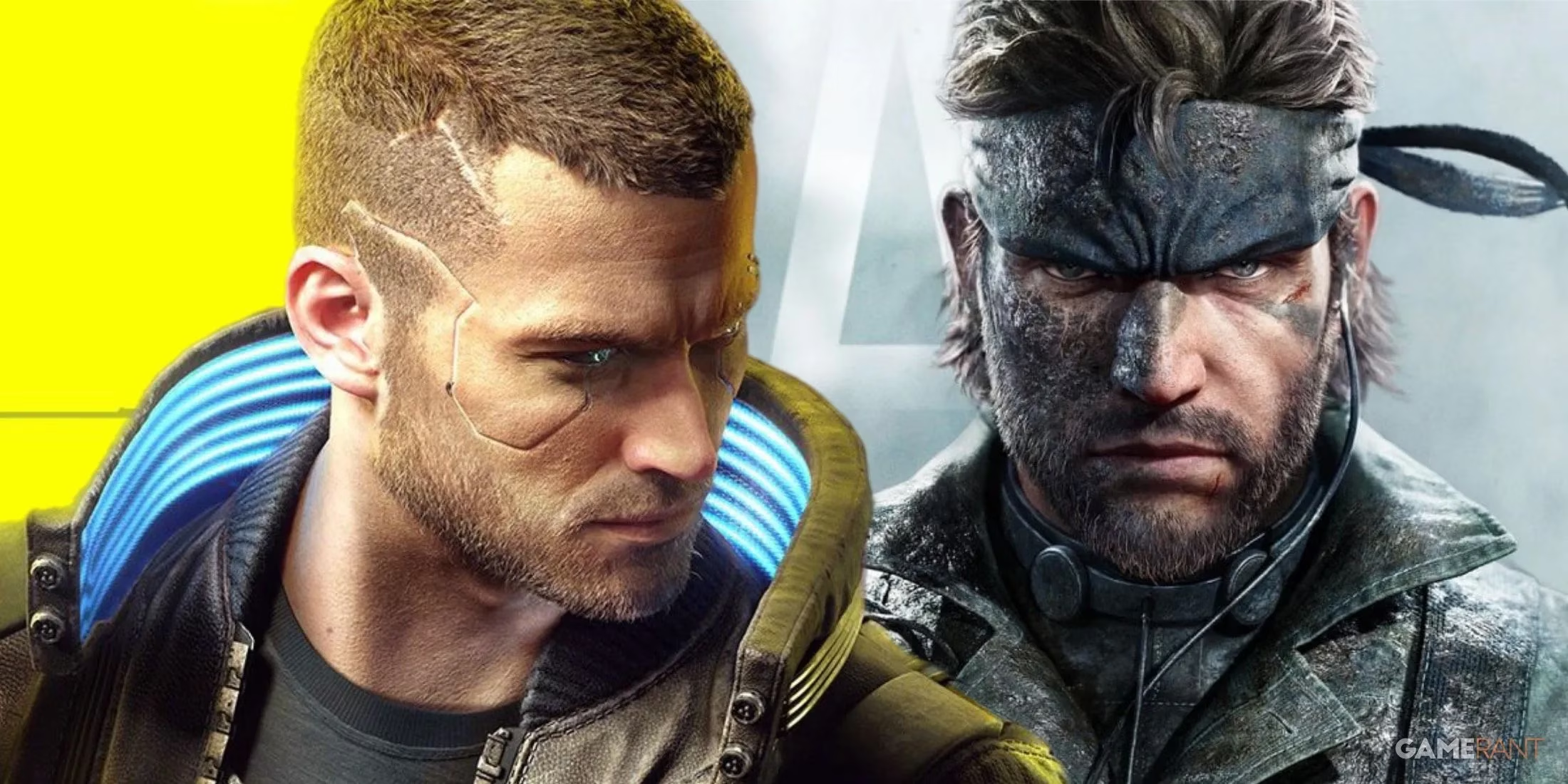
The parallels between Cyberpunk's technological dystopia and Konami's legendary Metal Gear franchise offer tantalizing possibilities for Project Orion. Metal Gear's bipedal nuclear tanks—walking arsenals of apocalyptic potential—could serve as inspiration for Militech's next evolutionary leap. Such machines would represent the ultimate expression of corporate might: the ability to deliver targeted annihilation with mechanical precision.
The Minotaur, already existing within Cyberpunk 2077's universe, stands as proof of concept. This remote-controlled bipedal mech, though lacking nuclear capabilities, demonstrates the technological foundation upon which Militech could build their arsenal of walking doomsday devices. The corporation's engineers work tirelessly in sterile laboratories, their eyes reflecting the blue glow of screens as they design tomorrow's nightmares.
Power's Corrupting Embrace
"Power tends to corrupt, and absolute power corrupts absolutely." Lord Acton's words echo with prophetic resonance in Night City's glass and steel canyons. Militech, with its insatiable hunger for dominance, embodies this principle with frightening fidelity. Their boardroom decisions ripple outward, transforming into tsunamis that drown the powerless.
Should Project Orion embrace this narrative direction, players might witness the birth of a new arms race—a competition not between nations but corporations, entities unbound by borders or international law. The stakes: not merely market share but the ability to hold entire regions hostage through the threat of nuclear devastation delivered by mechanical harbingers.
The Dance of Development
While Project Orion remains shrouded in mystery, its development continues in the shadow of The Witcher 4, CD Projekt Red's next major release. The studio, having restored Cyberpunk 2077 to its intended glory through years of patches and updates, now faces the daunting task of exceeding expectations with its sequel.
The timeline stretches before us:
-
2026: Current year, with development continuing
-
2027-2028: Possible release window, following The Witcher 4
-
2023-2025: Years spent conceptualizing and beginning production
The development team moves through their offices like digital shamans, conjuring new realities from lines of code. Their conversations blend technical specifications with philosophical debates about the nature of power in their fictional universe.
The Nightmarish Potential
Imagine, if you will, the terrifying spectacle of a Militech Metal Gear analog:
-
Towering mechanical frames silhouetted against Night City's skyline
-
Nuclear cores humming with barely contained energy
-
Weapon systems capable of pinpoint destruction or widespread devastation
-
Corporate logos emblazoned on machines of apocalyptic potential
Such creations would represent the logical conclusion of Night City's ethos—power concentrated not in the hands of the many, but in the mechanical grip of the few. The corporation's executives would view these machines not as instruments of terror but as business assets, their destructive potential reduced to entries on balance sheets.
The Human Element
Amidst this technological horror show, the human stories would remain Cyberpunk's beating heart. Technicians maintaining the mechanical beasts, questioning their complicity. Executives calculating the profit margins of armageddon. Ordinary citizens living in the shadow of walking nuclear arsenals, their lives rendered insignificant by the scale of corporate power.
These narratives would intertwine like neural pathways, creating a tapestry of human experience against the backdrop of technological excess. The sequel's strength would lie not merely in its spectacular vision of nuclear-capable mechs but in its exploration of how such technology reshapes humanity's relationship with power.
The Road Ahead
As we stand at this crossroads of anticipation, Project Orion's direction remains uncharted territory. Will CD Projekt Red draw inspiration from Metal Gear's nuclear-equipped bipedal tanks? Will Militech emerge as the central antagonistic force? These questions hover in the digital ether, awaiting answers.
What remains certain is Cyberpunk's unflinching examination of power's corrupting influence. Whether through nuclear mechs or other manifestations of corporate might, Project Orion will undoubtedly continue to explore the darkness that lurks within humanity's relationship with technology and authority.
The streets of Night City await their next chapter. The neon still burns. The corporations still hunger. And somewhere in Warsaw, developers craft the next evolution of this digital dystopia—one line of code at a time.