Night City's Metro Awakens: Cyberpunk 2077's Transformative 2.1 Update
Explore the groundbreaking Cyberpunk 2077 2.1 update, which masterfully introduces the long-awaited interactive metro system and a cascade of enhancements, transforming Night City into an even more immersive and thrilling dystopian playground.
In the neon-drenched sprawl of Night City, where chrome meets flesh and dreams collide with corporate nightmares, CD Projekt Red has unveiled a revelation that ripples through the cyberpunk community like electricity through neural implants. The Cyberpunk 2077 2.1 update emerges from the digital shadows, bringing with it a constellation of features that promise to breathe new life into an already revitalized metropolis. At the heart of this transformation lies a feature that players have yearned for since the game's tumultuous launch: a fully interactive metro system that finally allows V to experience Night City's elevated railways as more than mere loading screens.
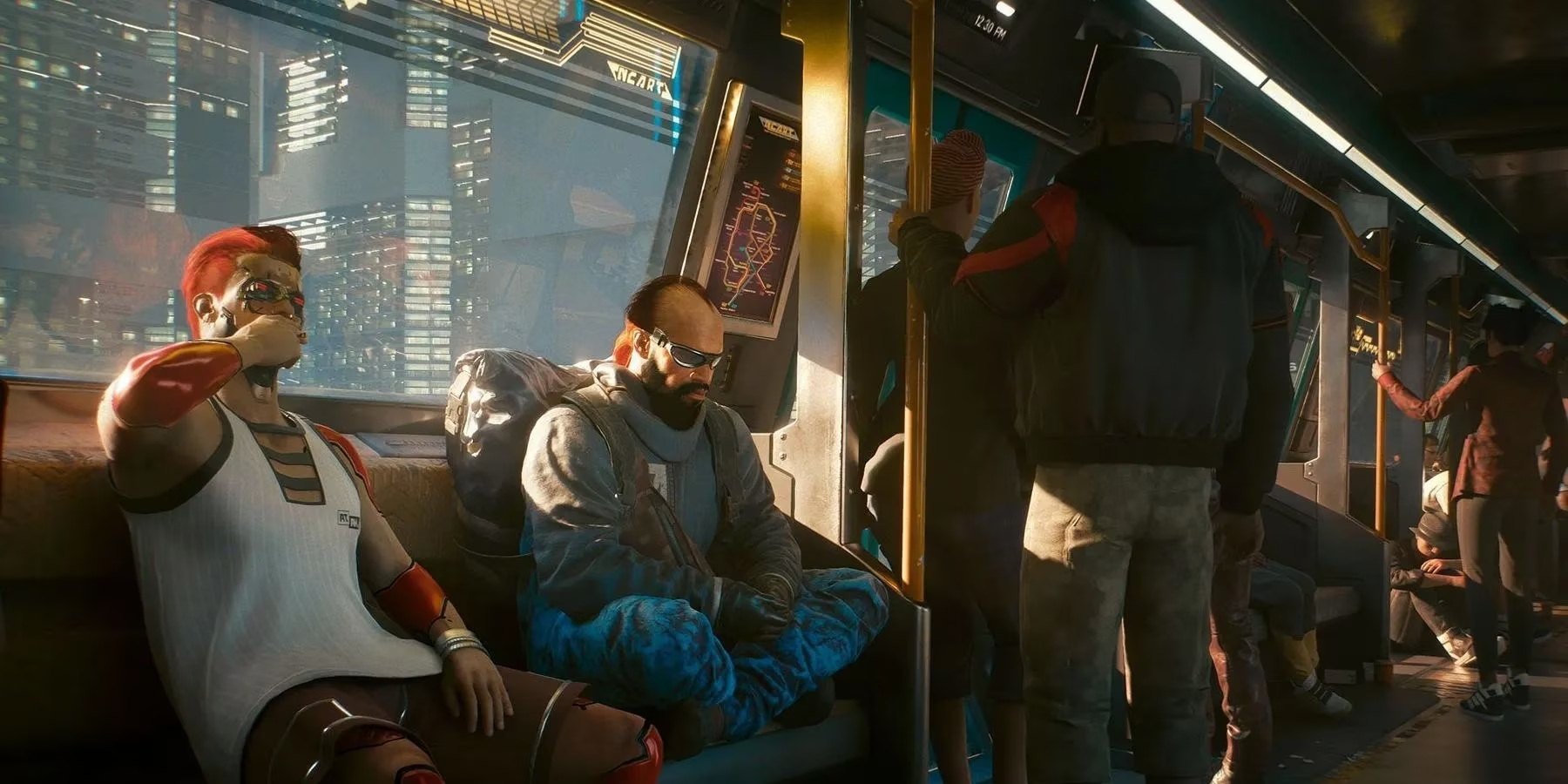
The Metro That Time Forgot 🚇
The absence of a functional metro system in Cyberpunk 2077 had long stood as a peculiar omission, like a symphony missing its crescendo. Throughout the game's extensive marketing campaign, the sleek trains gliding through Night City's vertical landscape featured prominently, teasing an immersive transit experience that never materialized at launch. Players could see the trains, hear their mechanical whispers, and even use them as a narrative device for fast travel, but the visceral experience of riding through the city's steel canyons remained frustratingly out of reach.
This gap in the game's world-building felt particularly jarring given the meticulous attention to detail evident in every other corner of Night City. The metropolis breathed with life—street vendors hawked their wares, gangs marked their territories, and the city's vertical architecture told stories of class division and corporate dominance. Yet the metro system, a fundamental artery of urban life, remained a ghost of what it could have been.
CD Projekt Red had previously maintained that implementing an interactive metro system wasn't a priority, focusing instead on other aspects of the game's redemption arc. However, the persistent chorus of player feedback, combined with the studio's commitment to fulfilling the game's original vision, has culminated in this unexpected reversal. The 2.1 update transforms the metro from a mere fast-travel mechanism into what CDPR describes as a genuine "role-playing feature," allowing players to experience real-time journeys through Night City's elevated transit network.
A Cascade of Enhancements 🎮
The metro system, impressive as it is, represents merely the opening act in 2.1's extensive repertoire of improvements. The update unfolds like a carefully orchestrated heist, each feature complementing the others to create a more cohesive and engaging experience. Consider the enhancement to Adam Smasher's boss fight—the legendary full-body cyborg conversion who serves as one of the game's most memorable antagonists. The buffed encounter promises to deliver a more challenging and satisfying confrontation, worthy of the buildup and lore surrounding this iconic character.
New Wheels and Thrills 🏍️
The vehicular additions in 2.1 paint Night City's streets with fresh possibilities:
-
Portable Radio System: Players can now carry their favorite tunes beyond vehicle confines, transforming every firefight and exploration session into a personally soundtracked experience
-
Expanded Racing Circuit: New car races thread through Night City's districts, offering adrenaline-fueled competitions
-
Fresh Vehicle Roster: Additional rides join V's potential garage, each with unique handling characteristics
-
Johnny's Porsche Quest: A new mission centered around Johnny Silverhand's iconic Porsche 911 adds narrative depth to the legendary rockerboy's legacy
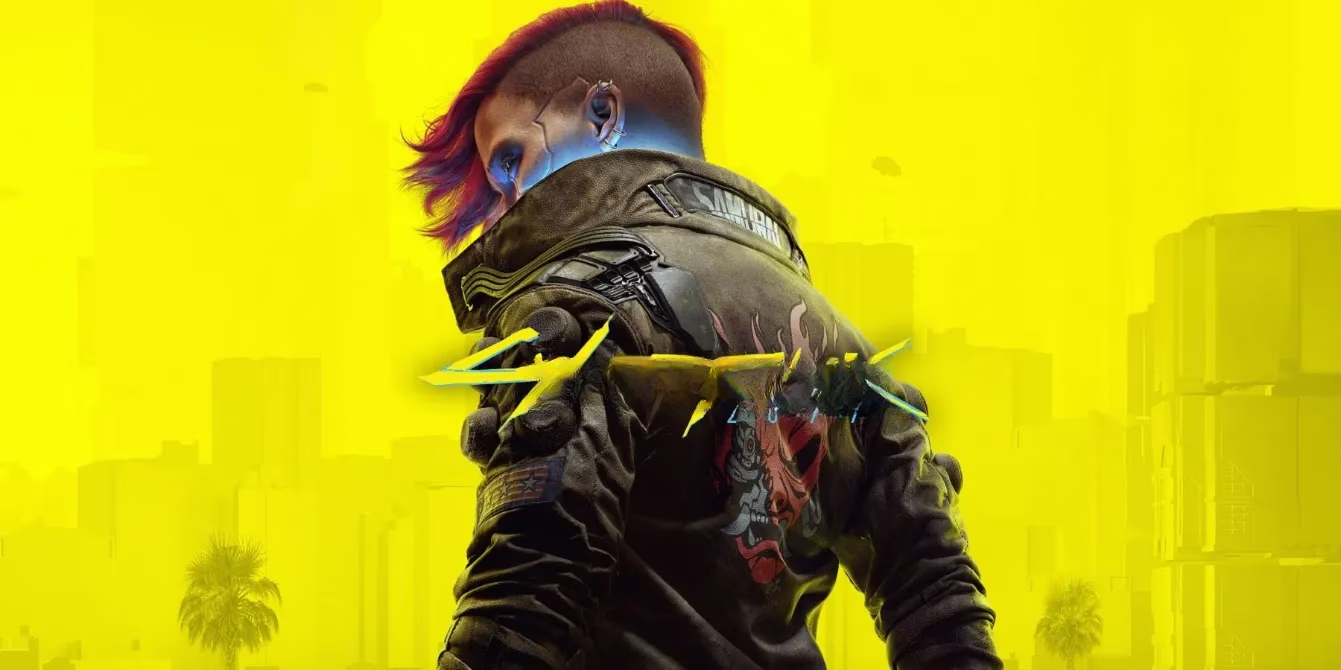
The motorcycle mechanics receive particular attention, introducing trick systems that transform two-wheeled travel from mere transportation into an expression of style and skill. Like a street samurai perfecting their blade work, players can now master aerial maneuvers and stunts, adding a layer of kinetic artistry to their journeys through Night City's neon-lit streets.
Living Consequences and Digital Intimacy 💔
Perhaps most intriguing among 2.1's additions are the dynamic gang chase systems and enhanced relationship mechanics. The former introduces genuine consequences for player actions—cross the wrong gang, and they'll remember. Night City becomes less forgiving, more reactive, as if the city itself develops a memory like a neural processor cataloging every slight and transgression. These dynamic encounters promise to make the world feel more alive and responsive, where actions ripple outward with tangible consequences.
The relationship enhancement allows V to spend quality time with romantic partners at will, addressing a common criticism about the game's romance options feeling too scripted and limited. This feature transforms digital relationships from predetermined story beats into something more organic and player-driven, deepening the emotional investment in these connections.
Accessibility and Inclusion 🌟
The update's commitment to accessibility options demonstrates CD Projekt Red's understanding that Night City should be navigable for all players, regardless of physical limitations. These additions ensure that more people can experience V's journey through the dystopian future, removing barriers and opening doors to previously excluded audiences.
Feature Comparison Table
| Feature Category | Previous State | 2.1 Enhancement |
|---|---|---|
| Metro System | Fast-travel only | Real-time rides with skip option |
| Boss Fights | Standard difficulty | Enhanced Adam Smasher encounter |
| Audio Experience | Vehicle-bound radio | Portable radio system |
| Gang Interactions | Static responses | Dynamic chase mechanics |
| Romance Options | Scripted encounters | Player-initiated meetings |
| Vehicle Activities | Basic racing | Expanded races + motorcycle tricks |
The Unexpected Renaissance 🎭
What makes the 2.1 update particularly remarkable is its very existence. CD Projekt Red had previously declared that the 2.0 update would serve as the game's final major overhaul—a definitive statement that seemed to close the book on Cyberpunk 2077's evolution. The 2.0 update itself was monumental, fundamentally reworking core systems and addressing years of community feedback. It represented a phoenix rising from digital ashes, transforming Cyberpunk 2077 from a cautionary tale into a redemption story.
Yet here stands 2.1, defying expectations like a netrunner breaking through supposedly impenetrable ICE. The update's scope suggests that CD Projekt Red's commitment to Cyberpunk 2077 runs deeper than corporate statements might indicate. The studio appears driven not merely by obligation but by a genuine desire to realize the game's full potential, to deliver on promises made during those heady pre-release days when Night City existed only in trailers and imagination.
The developer has teased that additional details about 2.1 remain under wraps, hinting at even more substantial changes yet to be revealed. This approach builds anticipation while demonstrating confidence in the update's content—a stark contrast to the game's troubled launch period when silence often preceded disappointment.
Night City's Future Horizon 🌆
As 2026 unfolds, Cyberpunk 2077 stands as a testament to persistence and evolution in game development. The 2.1 update represents more than bug fixes or minor tweaks; it embodies a philosophy of continuous improvement and player-focused development. Each feature, from the metro system to the enhanced romance options, addresses specific community requests while maintaining the game's core identity.
The transformation of Cyberpunk 2077 from its rocky 2020 launch to its current state mirrors the game's own themes of transformation and redemption. V's journey through Night City parallels the game's own evolution—both starting from difficult circumstances, both fighting to become something greater, both ultimately defined not by their origins but by their determination to improve.
For players returning to Night City or experiencing it for the first time, the 2.1 update promises a more complete vision of CD Projekt Red's cyberpunk dystopia. The metro system alone transforms navigation from a purely functional activity into an opportunity for immersion and observation. Watching the city scroll past train windows, observing the vertical stratification of society, and experiencing the rhythm of urban life adds texture to an already rich world.
The Road Ahead 🛣️
While CD Projekt Red has shifted primary development focus to future projects, including the next Witcher game and Cyberpunk 2077's sequel, the 2.1 update demonstrates that Night City's story isn't quite finished. The update arrives as both a gift to the dedicated community and a statement of intent—a declaration that quality and player satisfaction remain paramount concerns.
The gaming landscape of 2026 has seen numerous titles promise revolutionary experiences only to deliver disappointment. Cyberpunk 2077's journey from troubled launch to redemption arc to continued support offers a different narrative: one of accountability, persistence, and genuine commitment to craft. The 2.1 update cements this legacy, proving that even in an industry often characterized by moving on to the next project, there's value in perfecting what already exists.
As V rides the metro through Night City's neon-soaked streets, as gangs give chase through rain-slicked alleys, as romantic partners wait for quality time, and as Johnny's Porsche roars through new adventures, players will experience a more complete vision of what Cyberpunk 2077 was always meant to be. The 2.1 update doesn't just add features—it fulfills promises, realizes potential, and demonstrates that in Night City, as in game development, transformation is always possible. 🌃✨