Phantom Liberty's Moral Dilemma: A Masterclass in Narrative Choice
Cyberpunk 2077's Phantom Liberty expansion delivers a masterful, morally complex narrative in the rain-soaked streets of Dogtown, elevating the game to new heights with its compelling dystopian storytelling.
The rain-soaked streets of Dogtown have delivered something truly extraordinary. CD Projekt Red's Phantom Liberty expansion for Cyberpunk 2077 stands as a towering achievement in video game storytelling, reaching heights not seen since The Witcher 3's legendary Blood & Wine DLC. This isn't just another add-on slapped onto an existing game—it's a complete reimagining of what Cyberpunk 2077 can be, wrapped in a narrative so compelling it'll keep players up at night questioning their choices.
A Dystopian Playground of Moral Ambiguity
Dogtown emerges as more than just another location on Night City's map. This ruined, crime-infested district pulses with a bloody, beating heart that draws players into its web of corruption and intrigue. The expansion doesn't just complement the base game—it elevates it, overhauling core mechanics while telling a story that hits different than V's original journey. Here, the focus shifts from the glittering neon facades to the people crushed beneath them, those exploited by corrupt governments and mega-corporations who view human lives as expendable resources.
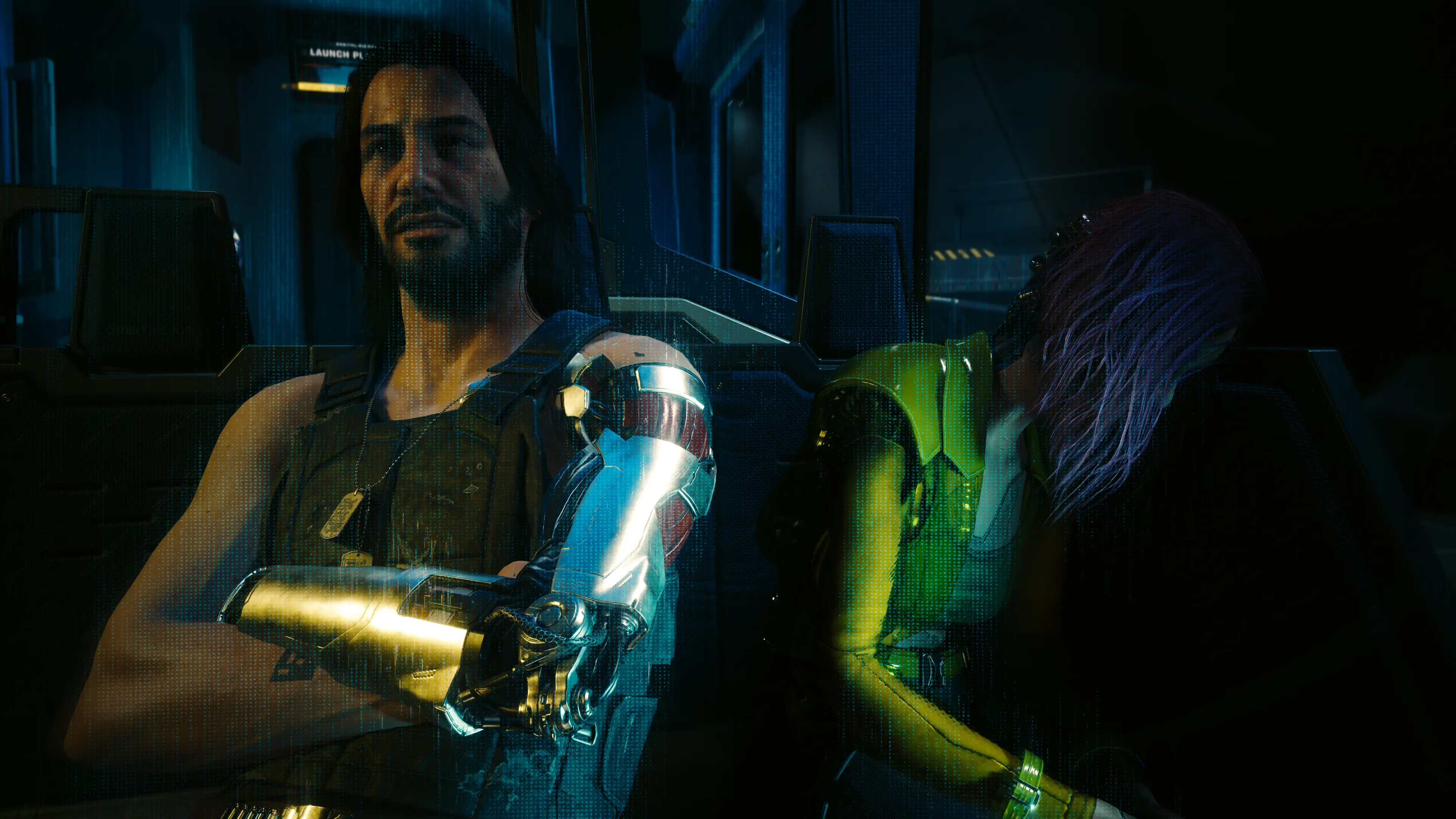
The narrative kicks off innocently enough—helping out a young woman in a tight spot. Classic merc work, right? Wrong. What starts as a straightforward gig spirals into an absolute clusterfuck involving presidential assassinations, covert ops, and a netrunner who could literally end the world if weaponized. Talk about mission creep! 😅
Between a Rock and a Hard Place: The Songbird Dilemma
The crux of Phantom Liberty's emotional weight centers on two characters: Songbird, a desperate netrunner seeking freedom from her handlers, and Solomon Reed, a veteran operative imprisoned by decades of blind obedience. After infiltrating Kurt Hansen's lair, players face the kind of choice that'll haunt them long after credits roll—do you side with Songbird's desperate bid for freedom, or trust Reed's promise to save her within the system?
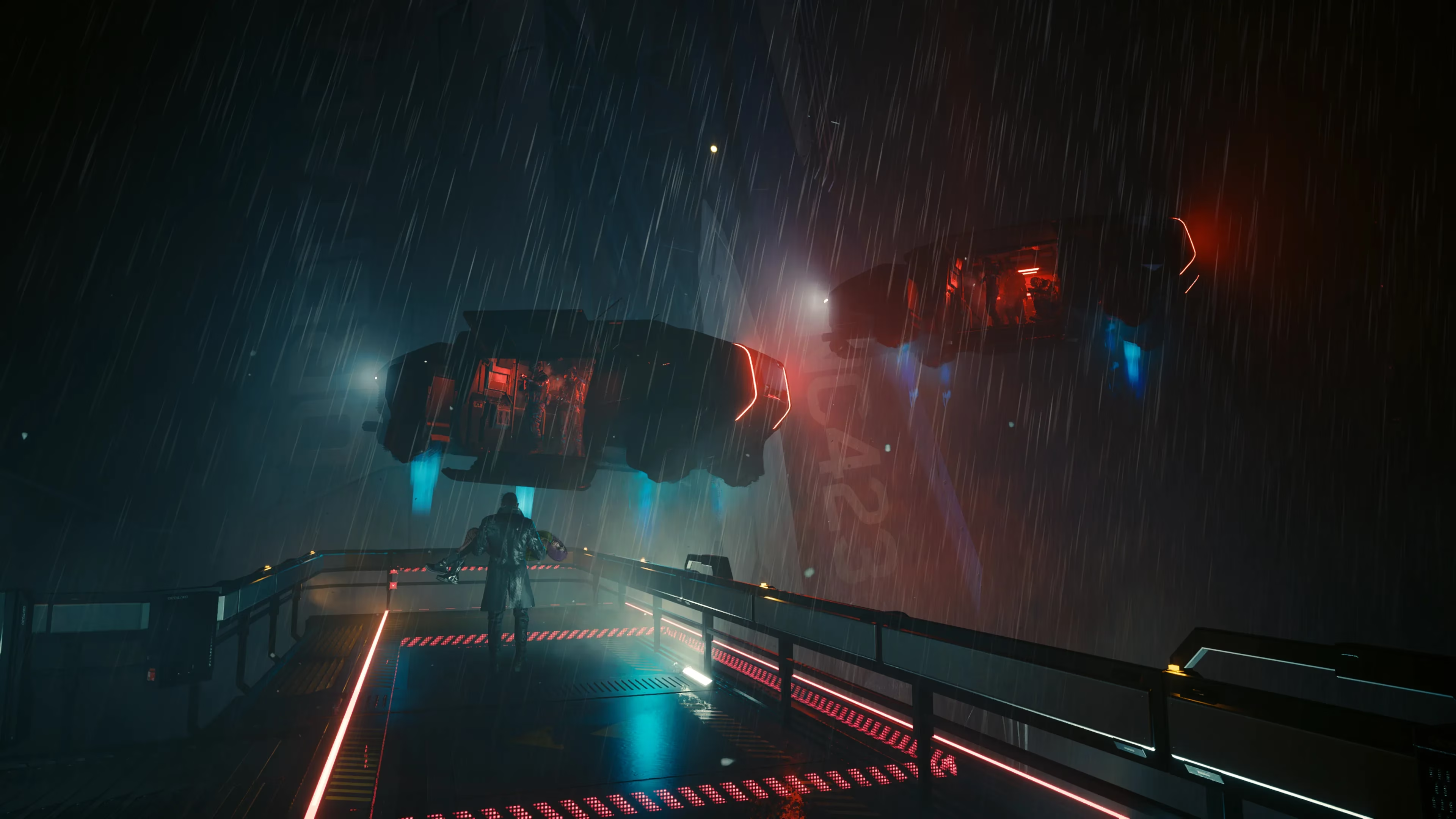
Choosing Songbird's path leads to an absolutely brutal escape sequence that channels major Edgerunners vibes. Fighting through Dogtown's security forces, watching this young woman pump herself full of medicine just to stay alive another hour—it's rough, choom. Really rough. The journey to Night City's spaceport feels doomed from the start, with Reed breathing down your neck and every security guard in the city on high alert.
The Blackwall Unleashed
The climactic firefight delivers peak cyberpunk action as Songbird unleashes the Blackwall's full potential. It's a spectacular, terrifying display of power that reminds everyone why netrunners are feared throughout Night City. But here's the kicker—as you're rushing toward that shuttle, desperately trying to secure Songbird's freedom, Johnny Silverhand drops a truth bomb that recontextualizes everything.
She's been lying about the cure. 💔
Songbird never intended to help V. Her entire play was about securing her own escape, using V as a means to an end. Now, standing on that shuttle with the finish line in sight, players must decide: call Reed and cut a deal, or stay the course and let this bird fly free, even if it means V gets left behind?
The Weight of Choice
This is where Phantom Liberty transcends typical video game storytelling and enters "can't stop thinking about it" territory. Songbird has spent her entire adult life molded into a weapon against her will. She's been forced to betray friends, hurt comrades, and sacrifice her humanity to meet her masters' demands. Her existence is pure misery. Even knowing she deceived V, letting her escape feels right on a fundamental level.
But then there's Reed. This man's entire identity is wrapped up in following orders, even when those orders clash violently with his personal beliefs. He genuinely cares for Songbird—hell, he's willing to forgive her for literally orchestrating his murder years prior. Yet he can't see past the fog of obedience that NUSA has wrapped around him like chains. If you give up Songbird, Reed promises to save her, to keep her alive. But at what cost? She'll just be thrust back into the same oppressive system she risked everything to escape.
Four Endings, Infinite Regret
The final scene plays out in the rain, with Songbird's body barely clinging to life. Players can:
-
Hand her over to Reed and watch him return to NUSA with their prize
-
Execute Reed on the spot, ending him before he can react
-
Reason with him, trying to make him see sense (spoiler: he doesn't)
-
Let Reed take the shot, choosing to die rather than betray either side
Each option carries devastating consequences that ripple outward in ways you won't fully understand until much later. The brilliance lies in how none of these choices feel clearly "right" or "wrong." This ain't no binary good-evil system—it's messy, complicated, and painfully human.
The Reload Dance
Many players find themselves stuck in what we'll call the "reload loop"—trying every option, watching each outcome play out, desperately searching for the "good" ending that doesn't exist. Gunning down Reed in cold blood and sending Songbird moonward might bring temporary satisfaction, but the lingering questions never fade. What if Reed survived? What if Songbird made it to the moon but couldn't escape her past? What if, what if, what if...
Why It Works So Damn Well
Phantom Liberty succeeds because it refuses to show its full hand. Players make decisions based on incomplete information, just like in real life. You can't min-max morality or reload enough times to find the "perfect" outcome, because there isn't one. Every choice carries weight, consequences that might not manifest for days, weeks, or months in-game.
The expansion takes Cyberpunk 2077's core theme—how far will you go to survive in a system designed to crush you—and explores it from every angle:
| Character | Motivation | Tragedy |
|---|---|---|
| Songbird | Freedom from weaponization | Forced to become what she hates |
| Reed | Duty and loyalty | Can't see the chains binding him |
| V | Survival and purpose | Used by everyone, saved by no one |
| Myers | Power and control | Represents the system itself |
The Edgerunners Echo
The expansion's finale deliberately mirrors Edgerunners' ending—that same desperate, rain-soaked defiance against impossible odds. Both stories understand that in Night City, happy endings are corporate propaganda. The best you can hope for is going out on your own terms, making choices that align with who you are rather than who the system wants you to be.
This thematic consistency elevates Phantom Liberty beyond typical DLC territory. It's not just "more Cyberpunk"—it's the purest distillation of what Cyberpunk 2077 was always trying to say about power, agency, and the cost of survival in a world that views human beings as resources to be exploited.
The Aftermath: Living With Your Choices
What makes Phantom Liberty's ending truly exceptional is how it continues to resonate after the credits roll. Players find themselves mentally replaying scenarios, wondering if different dialogue choices would have changed outcomes, questioning whether their moral compass pointed true or led them astray.
There's no achievement for making the "right" choice because there isn't one. The only right choice is the one that brings you the most satisfaction and least regret—and even that's not guaranteed. You might gun down Reed, send Songbird to freedom, and still lie awake at three in the morning wondering if you just killed a good man trying to save someone he loved.
That's powerful storytelling, choom. That's the kind of narrative design that stays with players for years, the kind that sparks endless forum debates and Discord arguments. Did Songbird deserve freedom after lying to V? Does Reed's loyalty to a corrupt system make him complicit in its crimes? Can you really blame either of them for trying to survive in a world designed to kill them?
A New Standard for Expansions
Phantom Liberty doesn't just meet the bar set by Blood & Wine—it arguably surpasses it. While The Witcher 3's expansion delivered a fairytale ending to Geralt's story, Phantom Liberty offers something rawer and more unsettling: a reminder that in Night City, there are no happy endings, only different flavors of bittersweet.
The expansion proves that Cyberpunk 2077, despite its troubled launch, has evolved into something truly special. The overhaul of core systems combined with this caliber of storytelling creates an RPG experience that finally delivers on those pre-2020 promises.
Final Thoughts: The Choice That Defines You
At its core, Phantom Liberty asks players to examine their own moral framework under extreme pressure. When faced with impossible choices involving people you've grown to care about, what principles guide your decision? Do you prioritize freedom over safety? Honesty over loyalty? Survival over integrity?
The genius of the expansion is that it provides no clear answers, only consequences. Whether you stood by Songbird or trusted Reed, whether you pulled the trigger or tried to talk your way out, your choice reveals something fundamental about who you are as a player and who you've shaped V to become.
Phantom Liberty represents the full realization of Cyberpunk 2077's RPG ambitions—a story where player agency matters, where consequences feel real, and where moral ambiguity reigns supreme. It's messy, uncomfortable, and utterly unforgettable. Years from now, when players discuss the greatest video game expansions ever made, Phantom Liberty will be part of that conversation, standing alongside giants like Blood & Wine and The Old Hunters.
And honestly? That rain-soaked decision in Dogtown will keep players hitting that reload button, trying every option, searching for peace that might never come. Because in Night City, the only thing more dangerous than the wrong choice is wondering what could have been if you'd chosen differently. 🌃✨