Starfield's Rocky Journey: A Space Odyssey Struggling to Find Its Path
Starfield PS5 release and Bethesda's space RPG revival promise bold, incremental improvements for gamers seeking a stellar adventure.
In the vast cosmos of gaming, Starfield has been drifting somewhat aimlessly since its 2023 launch. Bethesda's ambitious space RPG, once heralded as the next evolution in the genre, hasn't quite reached escape velocity from the gravitational pull of disappointment. Three years after its initial Xbox and PC release, the game finds itself preparing for a PS5 debut in what many industry observers are calling its "last big chance at success." 😬
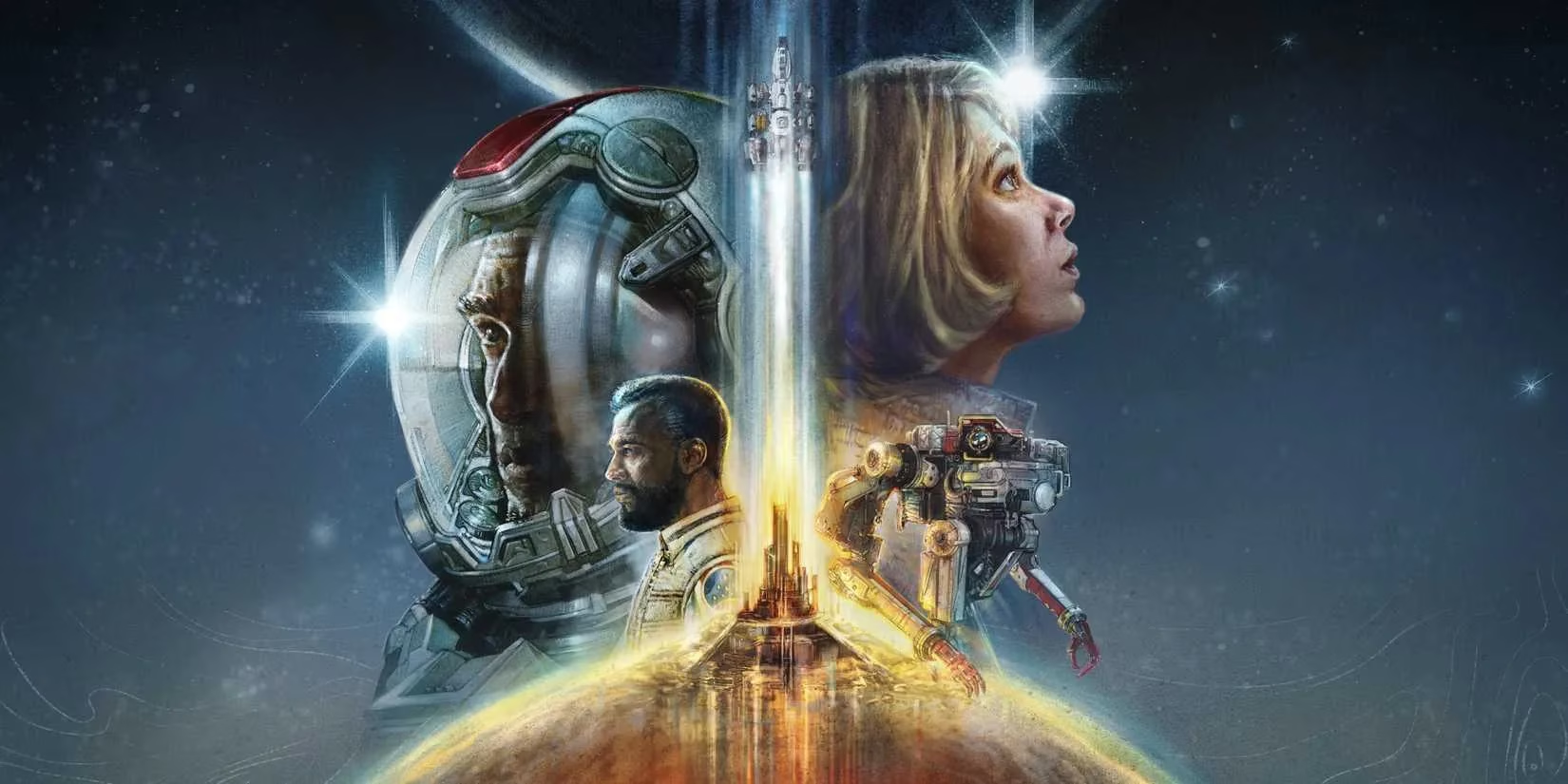
A Galaxy Not So Far, Far Away from Problems
The development team at Bethesda Game Studios, the wizards who once enchanted players with Skyrim and Fallout 3, seemingly lost their magic wand when crafting this particular cosmic adventure. Despite boasting gorgeous NASApunk aesthetics and interesting locations to explore, Starfield's gameplay formula felt like a relic from a bygone era—practically prehistoric by 2026 standards.
Instead of delivering the boundless space odyssey players were promised, gamers found themselves embarking on what one might call "A Series of Unfortunate Loading Screens." The experience was further dampened by an abundance of cookie-cutter outposts populated by seemingly identical space pirates. One could say the game's universe was vast but ultimately shallow—like a cosmic puddle masquerading as an ocean. 🌊
The Post-Mortem Analysis
Since 2023, Bethesda has likely been conducting an extensive autopsy on why Starfield failed to ignite the gaming world like its predecessors. The diagnosis seems painfully obvious to many observers:
-
Outdated mechanics - Combat and exploration systems that feel connected to games from the early 2000s
-
Technical limitations - Those pesky loading screens breaking immersion
-
Repetitive content - Copy-pasted environments and enemies
-
Unfulfilled promises - The gap between marketing and reality
The PS5 Lifeline
As 2026 progresses, the impending PS5 release of Starfield feels less like a strategic business decision and more like a desperate grab for relevance. Microsoft's experiment with bringing Xbox exclusives to PlayStation has yielded mixed results—Forza Horizon 5 performed admirably, while Gears of War: Reloaded and Hellblade 2 barely registered on the cultural radar.
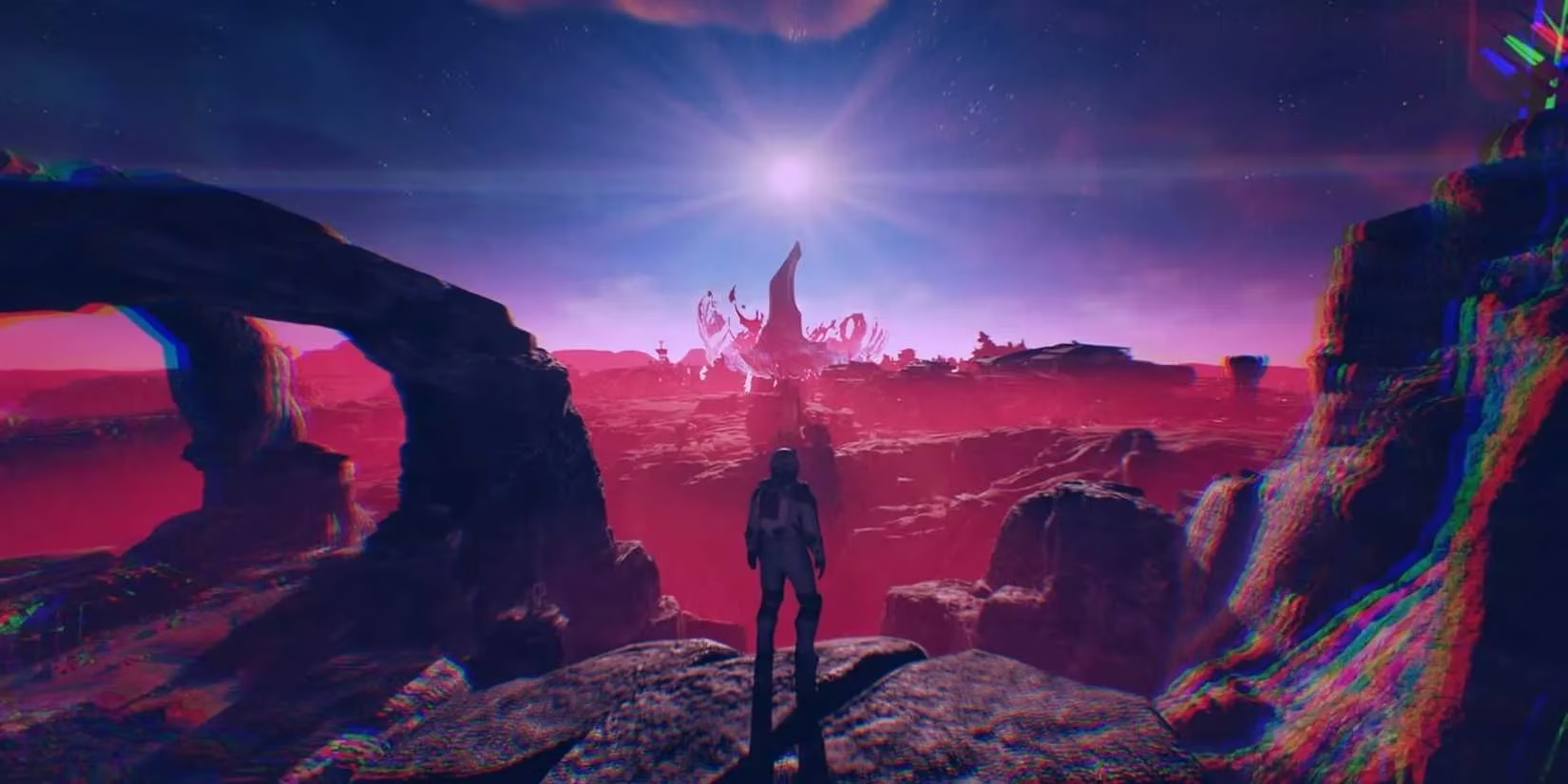
Improvements on the Horizon?
Recent weeks have seen selected community influencers gaining early access to upcoming Starfield content. The rumor mill is churning at faster-than-light speeds, but the general consensus suggests players should temper their expectations. This won't be Starfield's equivalent of Cyberpunk 2077's game-changing 2.0 update—more like incremental improvements to a fundamentally flawed foundation.
Gaming enthusiasts might find themselves chuckling at the irony: Bethesda appears to be making improvements to Starfield while simultaneously preparing to move on to more promising ventures like Fallout 5 and The Elder Scrolls 6. It's the corporate equivalent of fixing up a house you're already planning to sell. 🏠
The Cyberpunk Comparison: A Tale of Two Redemptions
The contrast between Starfield and Cyberpunk 2077 couldn't be more stark. CD Projekt Red's dystopian RPG launched as a technical disaster but contained the unmistakable DNA of greatness beneath its glitchy exterior. Players and critics alike could sense the potential—it just needed time to mature.
Cyberpunk's redemption arc was possible because:
| Cyberpunk 2077 | Starfield |
|---|---|
| Broken but ambitious | Working but uninspired |
| Clear vision hampered by technical issues | Fully realized but outdated vision |
| Developers committed to complete overhaul | Developers likely focused on next projects |
| Strong narrative foundation | Serviceable but forgettable story |
After years of updates culminating in the Phantom Liberty expansion, Cyberpunk 2077 finally delivered on its promises. The game had always possessed the essential ingredients for greatness—the recipe just needed refinement.
The Fundamental Dilemma
The uncomfortable truth that Bethesda faces is that Starfield's issues aren't merely technical or superficial—they're baked into the game's very DNA. Open world space travel without loading screens would indeed be marvelous, but implementing such a feature would essentially require building an entirely new game.
With Microsoft reportedly tightening its purse strings in 2026, the likelihood of Starfield receiving the resources necessary for a complete overhaul seems about as probable as finding a habitable planet in our own solar system. 🪐
Looking to the Stars Ahead
As Starfield prepares to dock at PlayStation's station, one can't help but wonder if this is merely a pit stop on the way to obscurity. The game that was supposed to revolutionize space RPGs now serves as a cautionary tale about the dangers of resting on one's laurels.
Perhaps the most poignant observation is that Starfield, unlike Cyberpunk 2077, was never broken—it just wasn't the game players wanted it to be. And no amount of patches, updates, or platform releases can fix a fundamental disconnect between vision and expectation.
As we navigate through 2026, with The Elder Scrolls 6 looming on the horizon and rumors of Fallout 5 beginning to circulate, Starfield risks becoming that awkward middle child in Bethesda's family of RPGs—acknowledged but rarely discussed at family gatherings.
For now, players can only hope that the lessons learned from Starfield's journey will inform Bethesda's future cosmic endeavors. After all, even in the vastness of space, there's always room for improvement. 🌠