The Unrecorded Murder That Shook Night City
The mysterious murder of Saburo Arasaka in Night City, a pivotal corporate event, remains undocumented despite advanced recording technology, sparking intense debate about power and truth.
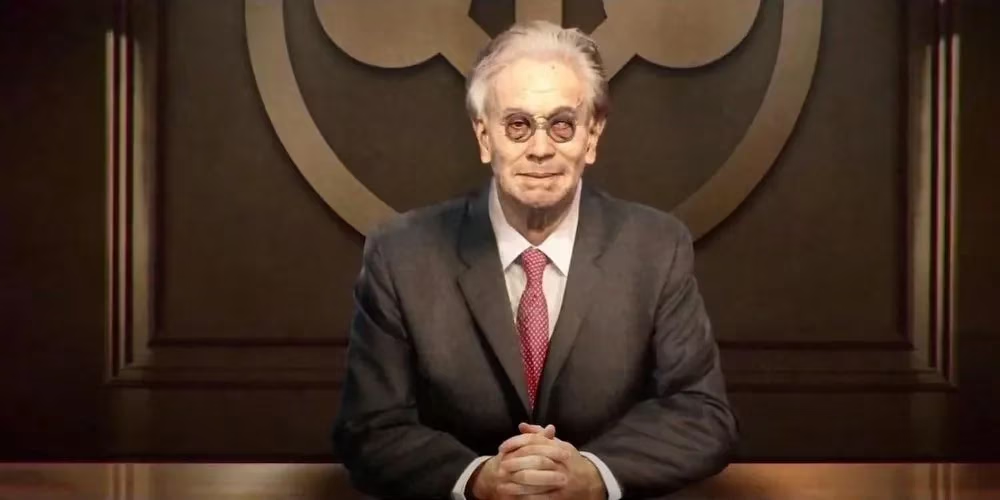
In the neon-drenched towers of Night City, where every breath is monitored and every transaction recorded, one of the most significant murders in corporate history went undocumented. The death of Saburo Arasaka, the 158-year-old Emperor and CEO of the world's most powerful megacorporation, occurred in plain sight of witnesses equipped with cutting-edge recording technology. Yet somehow, no footage exists of the moment when his own son strangled the life from him.
A Heist Gone Terribly Wrong
V and Jackie had one job that night: infiltrate Yorinobu Arasaka's penthouse atop the luxurious Konpeki Plaza and steal the Relic, a piece of technology worth more than most people's lives. The plan was simple, clean, and professional. What they didn't anticipate was becoming unwitting witnesses to a family drama that would reshape the balance of power across the entire globe.
Hidden in the shadows of the penthouse, the two mercs watched as Saburo Arasaka himself arrived for an impromptu visit. The tension in the room was palpable as father and son faced each other. Saburo, with his characteristic icy composure, began to lecture Yorinobu about his continued failures and rebellious behavior. The younger Arasaka paced like a caged animal, his agitation growing with each passing moment.
The Breaking Point
The conversation deteriorated rapidly. Yorinobu's criticisms of his father's schemes and selfishness grew more heated, his voice rising with each accusation. Saburo remained unmoved, his calm demeanor only seeming to fuel his son's rage further. Then came the final blow – not physical, but verbal. Saburo accused Yorinobu of treason and expressed relief that his deceased wife couldn't witness what their son had become.
That was the moment everything changed. 🔥
Yorinobu's control shattered. His hands found his father's throat, and the Emperor of the Arasaka Corporation died at the hands of his own flesh and blood. The bodyguard, Goro Takemura, entered moments later to find his master dead. Without hesitation, Yorinobu spun his web of lies, claiming assassins had poisoned his father.
The Question That Haunts Night City
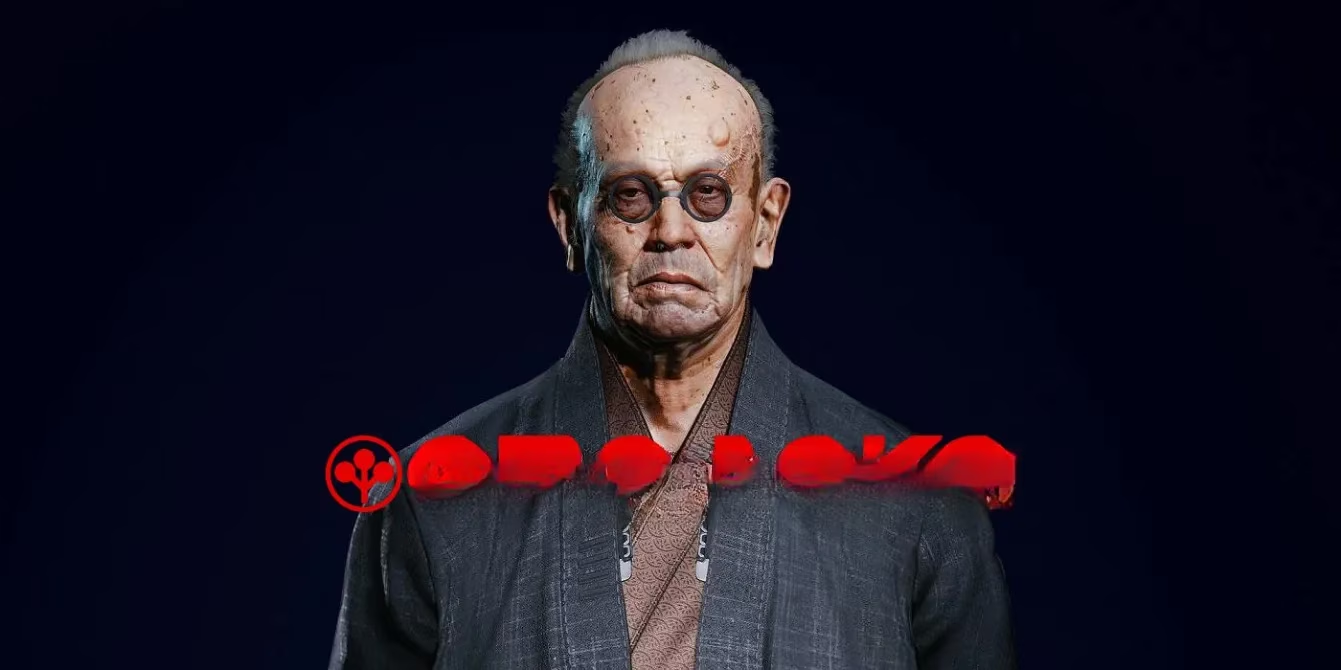
Here's where the story takes a puzzling turn. V possessed advanced cyberware, technology capable of recording everything they saw and heard. In a world where corporate espionage is currency and information is power, why didn't V capture footage of this monumental event? The question has sparked countless debates among those familiar with the incident.
Several theories have emerged:
The Technology Argument
-
Deep fake technology had advanced to the point where any video could be disputed
-
Arasaka's resources could easily discredit or suppress such footage
-
The authenticity of the recording would be questioned regardless of its quality
The Practical Considerations
-
V was in the middle of committing a serious crime themselves
-
Being caught on camera during a heist would damage their reputation
-
The stress of the situation may have prevented clear thinking
The Survival Instinct
-
Possessing such footage would make V a target for elimination
-
Arasaka would stop at nothing to recover or destroy the evidence
-
The risk far outweighed any potential benefit
Legal Complications Nobody Talks About
There's another angle that often gets overlooked in these discussions. V witnessed Yorinobu's crime while actively committing their own. They were trespassing in a high-security penthouse, attempting to steal proprietary technology worth millions. Any footage they recorded could be used against them in court, potentially invalidating its use as evidence against Yorinobu.
The legal system in 2026 is complex, especially when dealing with megacorporations. Arasaka's legal team could argue that evidence obtained during the commission of a crime is inadmissible. They could claim V fabricated the footage to deflect from their own criminal activities. The courtroom battle would be endless, expensive, and ultimately futile. ⚖️
The Family That Knew
As events unfolded in the weeks and months following Saburo's death, an interesting truth emerged: nobody really believed Yorinobu's story anyway. His sister, Hanako Arasaka, certainly didn't. Takemura, Saburo's most loyal bodyguard, saw through the lies immediately. The inner circle of Arasaka's power structure understood what had truly happened in that penthouse.
| Person | Belief About Saburo's Death | Action Taken |
|---|---|---|
| Hanako Arasaka | Knew her brother murdered their father | Sought to expose the truth |
| Goro Takemura | Suspected Yorinobu immediately | Investigated independently |
| Yorinobu Arasaka | Maintained the assassination story | Consolidated power |
| V | Witnessed the actual murder | Became entangled in corporate warfare |
The absence of video evidence, rather than hindering the truth, actually created opportunities for unexpected alliances. Hanako's relationship with V developed specifically because they shared knowledge of what really happened. Without concrete proof, they had to rely on trust, creating a bond that would prove crucial in the battles to come.
The Ripple Effects
Saburo's death sent shockwaves through the corporate world. Arasaka's stock fluctuated wildly as investors tried to gauge the stability of the company under new leadership. Rival corporations circled like sharks, sensing weakness. Night City itself became a powder keg, with various factions positioning themselves for the inevitable power struggle.
Yorinobu moved quickly to consolidate his position, but his father's shadow loomed large. Every decision he made was scrutinized, every move questioned. The lie about assassins created its own problems – it meant admitting that Arasaka's security had been breached, that the Emperor himself had been vulnerable. For a corporation built on the promise of absolute security, this was a devastating admission. 💀
Would Footage Have Changed Anything?
This is the million-eurodollar question. Looking back at how events unfolded, it's difficult to argue that video evidence would have significantly altered the outcome. The people who mattered already knew or strongly suspected the truth. Those loyal to Yorinobu would have dismissed any footage as fabricated. Those opposed to him didn't need video proof to justify their actions.
Consider the practical realities:
-
Corporate Power Dynamics: Arasaka's board of directors cared more about stability and profit than justice
-
Public Perception: The general public would never see such footage anyway
-
Political Implications: Multiple governments had vested interests in maintaining the status quo
-
Personal Safety: Anyone possessing such evidence would become a target
The truth is, in the world of 2026, where megacorporations wield more power than nations, traditional concepts of justice and evidence have become almost quaint. What matters isn't what actually happened, but what the powerful decide happened.
The Bigger Picture
The story of Saburo's unrecorded death reflects something deeper about the world V inhabits. It's a place where the most significant events can occur without documentation, where truth is malleable, and where power determines reality more than facts ever could. The absence of footage isn't a plot hole – it's a feature of a dystopian society where information is controlled, manipulated, and weaponized.
V's failure to record the murder, whether intentional or not, ultimately proved irrelevant to the larger narrative. The game that followed Saburo's death was played on a level where such evidence would have been just another piece to be moved, manipulated, or eliminated. Hanako didn't need a video to know what her brother had done. Takemura didn't need proof to dedicate himself to exposing the truth. And V didn't need footage to become entangled in a corporate war that would determine the fate of Night City.
The Legacy of an Unrecorded Crime
Years from now, historians and corporate analysts will debate what really happened in that penthouse. Some will believe the official story of assassins and poison. Others will whisper about patricide and family betrayal. But the truth – the actual, witnessed, unrecorded truth – will remain known only to a select few.
In a way, this makes the event even more powerful. Without video evidence to be analyzed, debated, and potentially dismissed, the murder of Saburo Arasaka exists in a quantum state of truth. It happened, witnesses saw it, but it cannot be proven. This ambiguity gives it a mythical quality, transforming a brutal family dispute into legend.
The question of why V didn't record the murder will continue to be discussed and debated. Was it a conscious choice made in the heat of the moment? A technical limitation? A narrative necessity? Perhaps it was all of these things, or none of them. What matters is that the absence of footage didn't prevent the truth from emerging, didn't stop justice from being pursued, and didn't diminish the impact of that fateful night.
In the end, the unrecorded murder of Saburo Arasaka serves as a reminder that in Night City, and in the world of 2026, some truths don't need to be recorded to be real. Some events are so significant that they transcend documentation, existing instead in the memories of those who witnessed them and the consequences that ripple outward from them. The Emperor is dead, killed by his own son, and whether or not there's footage of the act changes nothing about that fundamental reality. 🌃
The story continues to unfold, with or without video evidence, driven by the actions of those who know what really happened and those who refuse to accept the official lies. And somewhere in Night City, V carries the memory of that night, a burden of knowledge that no amount of cyberware can erase or enhance.