Why Cyberpunk 2077 Should Follow God of War's Half-Sequel Strategy
Cyberpunk 2077's remarkable redemption arc, culminating in the acclaimed Phantom Liberty expansion, leaves Night City at a pivotal crossroads. This compelling success at the end of its cycle presents a perfect opportunity for a strategic half-sequel, an innovative AAA trend for maintaining momentum and narrative continuity.
The gaming landscape has witnessed one of the most remarkable redemption arcs in recent memory with Cyberpunk 2077. After a tumultuous launch in 2020 that left many players disappointed, CD Projekt Red has meticulously rebuilt the franchise's reputation through consistent updates and improvements. The release of the Phantom Liberty expansion stands as a powerful testament to the studio's dedication, showcasing just how dramatically the game has evolved from its problematic beginnings. But as this chapter closes, an intriguing question emerges: what comes next for Night City?
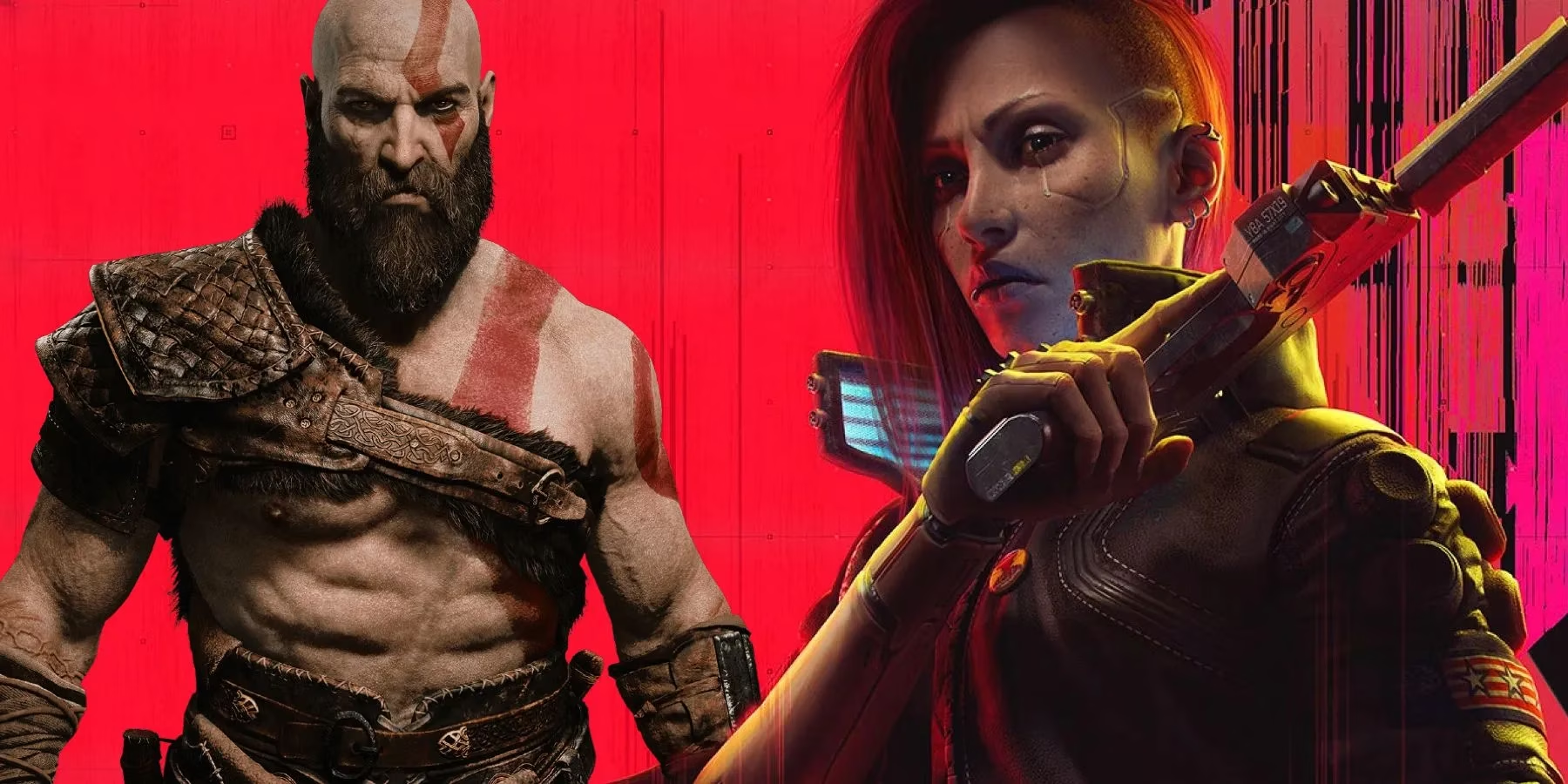
The Paradox of Success at the End of a Cycle
Cyberpunk 2077 finds itself in a peculiar predicament. The game has finally achieved the level of polish and acclaim it originally promised, yet this triumph arrives precisely as its development cycle concludes. With Phantom Liberty confirmed as the sole major story expansion, CD Projekt Red faces a critical challenge: how can they maintain the momentum of this hard-won success without immediately diving into another massive, resource-intensive project?
The answer might lie in an emerging trend within the AAA gaming industry—the half-sequel. This innovative approach has proven remarkably effective for maintaining franchise relevance while managing development resources more efficiently. Could this be the perfect solution for Cyberpunk's current situation?
The Rise of the Half-Sequel Phenomenon
The concept of half-sequels has gained significant traction in recent years, representing a middle ground between full-scale sequels and traditional DLC expansions. These projects offer several compelling advantages:
Key Benefits of Half-Sequels:
-
Narrative Continuity: They bridge the gap between major releases, keeping storylines fresh in players' minds
-
Resource Efficiency: Developers can reuse existing assets and engine improvements
-
Lower Risk: Reduced development scope means less financial exposure
-
Maintained Engagement: Fans remain invested in the franchise during lengthy development cycles
-
Creative Experimentation: Studios can test new gameplay mechanics or narrative approaches
Spider-Man: Miles Morales exemplifies this model's potential. The game delivered a meaningful, self-contained story that expanded the universe while allowing Insomniac Games to maintain franchise momentum between major releases. The project succeeded both critically and commercially, proving that players appreciate these intermediate offerings when executed properly.
God of War's Rumored Strategy
The God of War franchise has reportedly embraced this approach, with substantial speculation surrounding a half-sequel to 2022's Ragnarok. Industry insiders suggest this project could address unresolved narrative threads from Ragnarok while potentially introducing new playable characters. Given the considerable development time required for mainline God of War titles, such an intermediate release would serve multiple purposes:
-
Narrative Closure: Tying up loose ends from Ragnarok's story
-
Character Development: Exploring supporting characters in greater depth
-
Franchise Momentum: Keeping the IP relevant during the wait for the next major installment
-
Technical Innovation: Testing new gameplay systems in a lower-stakes environment
This strategy acknowledges a fundamental reality of modern game development: creating AAA titles of God of War's caliber requires years of intensive work. How can studios keep their franchises alive during these extended development periods without burning out their teams or disappointing their audiences?
Why Cyberpunk 2077 Needs This Approach
The parallels between God of War's situation and Cyberpunk 2077's current position are striking. CD Projekt Red has confirmed that a sequel to Cyberpunk 2077 is in development, but considering the original game took eight years from announcement to release, fans face a potentially lengthy wait. During this extended period, several risks emerge:
The Danger of Momentum Loss:
-
Fading Cultural Relevance: The gaming landscape evolves rapidly; what's hot today may be forgotten tomorrow
-
Audience Migration: Players may move on to other franchises during extended absences
-
Wasted Synergy: The success of Phantom Liberty and the acclaimed Cyberpunk: Edgerunners anime creates valuable cross-media momentum that could dissipate
-
Competitive Pressure: Other cyberpunk-themed games may fill the void left by Cyberpunk's absence
CD Projekt Red cannot afford to let the franchise's current success evaporate during the development of a full sequel. The studio has worked too hard rebuilding trust and goodwill to risk losing it through inactivity. A half-sequel represents an elegant solution to this dilemma.
The Rich Potential of Cyberpunk's Universe
One of Cyberpunk 2077's greatest strengths lies in the depth and breadth of its source material. The Cyberpunk tabletop RPG universe extends far beyond Night City, encompassing a rich tapestry of locations, time periods, and characters. This expansive lore provides tremendous creative freedom for a half-sequel project.
However, maintaining some connection to the events and characters of Cyberpunk 2077 would likely prove beneficial. This approach would:
-
Leverage existing player investment in the world and characters
-
Allow for efficient asset reuse, particularly regarding Night City's architecture and design
-
Provide narrative continuity that enhances both the original game and the half-sequel
-
Reduce the learning curve for returning players
The Johnny Silverhand Opportunity
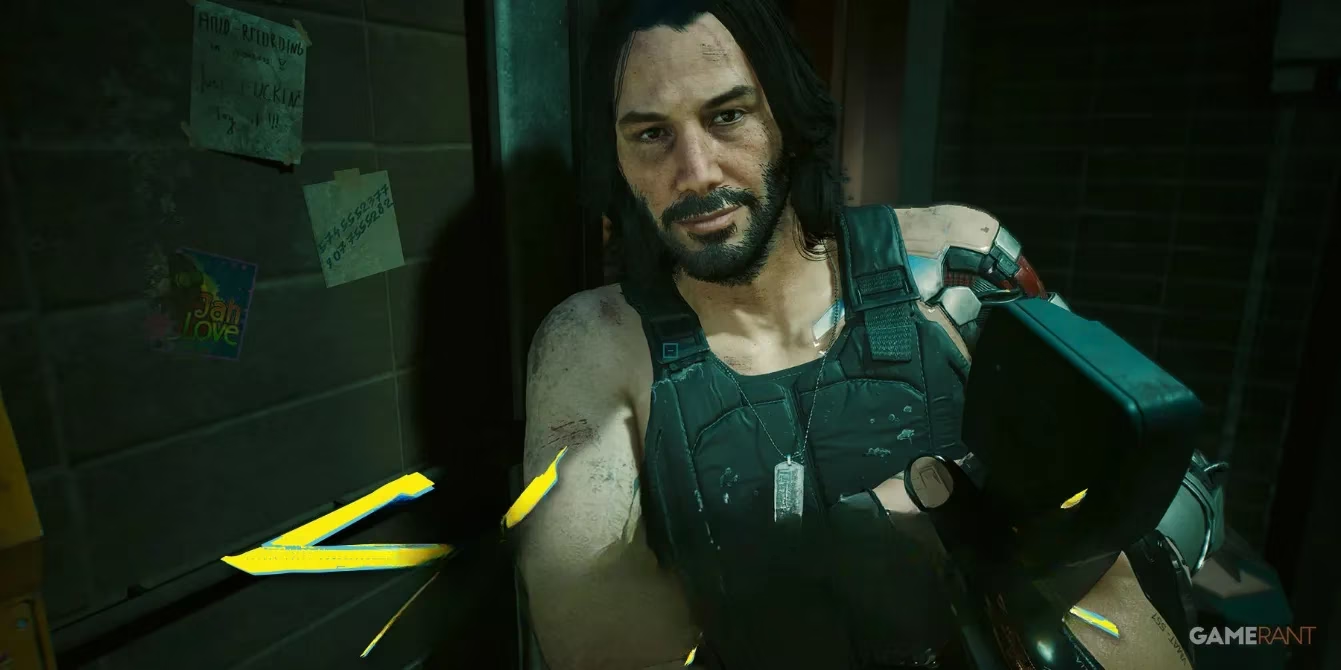
The most obvious and compelling direction for a Cyberpunk half-sequel would center on Johnny Silverhand as the protagonist. This legendary rockerboy's story offers immense narrative potential, particularly during his peak years in the 2020s—decades before his fateful encounter with V.
Why Johnny's Story Works:
| Advantage | Description |
|---|---|
| 🎸 Established Character | Players already know and care about Johnny from Cyberpunk 2077 |
| ⏰ Temporal Setting | The 2020s era offers a fresh perspective on Night City |
| 🎭 Narrative Depth | Johnny's transformation into a legend provides rich storytelling opportunities |
| 🔄 Asset Efficiency | Night City can be reused with period-appropriate modifications |
| 🎮 Gameplay Variety | Johnny's lifestyle allows for different mission types and approaches |
Imagine experiencing Night City during its formative years, witnessing the events that shaped Johnny Silverhand into the legend V encounters decades later. Players could participate in Silverhand's most notorious exploits, understanding firsthand the circumstances that led to his eventual fate. This approach would add tremendous depth to Cyberpunk 2077's narrative while standing as a compelling story in its own right.
Alternative Narrative Approaches
While a Johnny-focused narrative holds obvious appeal, CD Projekt Red could explore other creative directions for a half-sequel:
The Witness Perspective
Rather than controlling Johnny directly, players could embody a new character who experiences Silverhand's rise to notoriety firsthand. This approach offers several advantages:
-
Fresh Protagonist: A new character allows for different gameplay styles and narrative perspectives
-
Historical Context: Players witness pivotal events that shaped Night City's future
-
Character Flexibility: The protagonist could be customized similarly to V, maintaining player agency
-
Broader Scope: The story could explore multiple factions and perspectives beyond Johnny's immediate circle
This structure would allow CD Projekt Red to showcase Night City during a fascinating transitional period. The city of the 2020s would differ significantly from the 2077 version players know, offering opportunities for environmental storytelling and world-building. What corporate wars were being fought? How did the various gangs establish their territories? What technological developments were reshaping society?
Other Potential Directions:
-
Corpo Origins: A story focused on corporate espionage and intrigue
-
Nomad Chronicles: Exploring life outside Night City's walls
-
Netrunner Deep Dive: A narrative centered on the digital frontier
-
Gang Warfare: Rising through the ranks of Night City's underworld
Technical and Creative Advantages
A half-sequel approach offers CD Projekt Red significant practical benefits beyond narrative opportunities:
Development Efficiency:
-
Engine Familiarity: The team already understands the REDengine's capabilities and limitations
-
Asset Library: Thousands of models, textures, and animations can be repurposed
-
Established Systems: Core gameplay mechanics require refinement rather than reinvention
-
Streamlined Production: Smaller scope allows for faster iteration and testing
Risk Management:
-
Controlled Scope: A more focused project reduces the chance of feature creep
-
Proven Foundation: Building on Cyberpunk 2077's improved state minimizes technical risks
-
Market Testing: New ideas can be evaluated before committing to the full sequel
-
Budget Flexibility: Lower development costs provide more financial breathing room
Maintaining the Cyberpunk Ecosystem
The success of Cyberpunk: Edgerunners demonstrated the franchise's potential for cross-media storytelling. A half-sequel could further strengthen this ecosystem by:
-
Creating narrative bridges between different media formats
-
Introducing characters or storylines that could appear in future anime seasons
-
Expanding the universe in ways that benefit all Cyberpunk properties
-
Maintaining fan engagement across multiple platforms
This interconnected approach transforms Cyberpunk from a single game into a living, breathing universe that exists across multiple formats. Each new addition enriches the whole, creating a synergistic effect that benefits all properties.
The Path Forward
As Cyberpunk 2077 concludes its post-launch journey with Phantom Liberty, CD Projekt Red stands at a crossroads. The franchise has finally achieved the recognition and acclaim it deserves, but maintaining this momentum during the lengthy development of a full sequel presents significant challenges. A half-sequel, inspired by the God of War franchise's rumored strategy, could provide the perfect solution.
By focusing on Johnny Silverhand's story during Night City's formative years—or exploring the era through a new protagonist's eyes—CD Projekt Red could deliver a meaningful narrative experience that keeps fans engaged without requiring the massive resources of a full sequel. This approach would allow the studio to capitalize on Cyberpunk 2077's current success while efficiently managing development resources and maintaining franchise momentum.
The question isn't whether CD Projekt Red should pursue a half-sequel, but rather: can they afford not to? With the gaming industry's rapid evolution and fierce competition for player attention, allowing the Cyberpunk franchise to go dormant for years could prove disastrous. A well-executed half-sequel could steady the ship, keeping Night City alive in players' minds and hearts until the full sequel arrives.
The future of Cyberpunk remains unwritten, but one thing seems certain: the franchise's story is far from over. Whether through a half-sequel or another innovative approach, CD Projekt Red has an opportunity to build on their hard-won success and establish Cyberpunk as a enduring pillar of gaming culture. The only question is whether they'll seize it. 🌃✨